
Most songwriting books will tell you that inspiration comes from discipline, observation, and time spent at your instrument. They’re not wrong. But they’re missing one of the cheapest and most reliable shortcuts working songwriters use: when the well runs dry, switch instruments, for a synthesizer you’ve never touched before is a song you’ve never written before. The right cheap synth, parked on your desk, is the most reliable creative unblocker a writer can buy.
This guide is for the songwriter (guitarist, pianist, vocalist, bedroom producer) who wants to add a synth to their setup specifically to create new ideas, not to deepen an existing synth-nerd practice. The pedagogical literature on synthesis is enormous.
The literature on which inexpensive synths actually inspire songs is thin, because most gear writing is aimed at synth obsessives rather than at writers who want a tool. Below you’ll find honest, opinionated recommendations across price tiers, organized around the specific question of which synths put the most ideas in your head per dollar spent. Every product mentioned has a copyable link at the bottom of this guide.
Gear Mentioned In This Article:
Under $100
- Teenage Engineering Pocket Operators
- Teenage Engineering PO-33 K.O
- Teenage Engineering PO-32 Tonic
- Teenage Engineering PO-35 Speak
- Korg Monotron Delay
$100 to $200
- Korg Volca FM2
- Korg Volca Bass
- Korg Volca Keys
- Korg Volca Beats
- Korg Volca Drum
- Korg Volca Modular
- Korg NTS-1 mkII
- Behringer TD-3
- Donner B1 Analog Bass Synthesizer
$200 to $350
- Arturia MicroFreak
- Behringer Crave
- Behringer Model D
- Roland Aira Compact J-6
- Roland Aira Compact S-1
- Roland Aira Compact T-8
- Korg Monologue
- Modal Cobalt5S
$350 to $500
- Novation Bass Station II
- Yamaha Reface CS
- Yamaha Reface DX
- Yamaha Reface CP
- Yamaha Reface YC
- Korg minilogue xd module
Free Software Synths
Why a Synth Inspires Songwriting Differently Than a Guitar or Piano
If you write songs on the guitar or piano, your harmonic and melodic vocabulary is shaped by what those instruments make easy. Open chords, finger-friendly key centers, comfortable hand positions on the keyboard.
These preferences accumulate over years and quietly limit the range of songs you write. A synth, especially one with a built-in sequencer or a knob-per-function interface, breaks the limitation by giving you a different set of easy moves. A drone you can’t hold on a guitar becomes a one-finger pad. A bass line you’d never play on piano becomes a sequenced loop you stumble into by accident. A textural sound you couldn’t describe in words becomes a knob you turn until something catches your ear.
This is why synths show up so often in the writing rooms of producers who don’t think of themselves as synth players. The instrument’s job isn’t to be played well. Its job is to put unfamiliar notes and unfamiliar timbres in front of you so that your songwriting brain has something new to react to. Therefore, the most expensive synth on the market is no better than a hundred-dollar groovebox. It is also frequently worse, because deeper menus and more parameters take you further from the immediate, playful relationship that produces ideas.
What “Instant Inspiration” Actually Means in a Synth
Before evaluating specific instruments, it’s worth defining the property we’re looking for. A synth designed for instant inspiration tends to share four characteristics, and these are the criteria the recommendations below are scored against.
The first is tactile immediacy. A knob-per-function design (where most parameters have their own dedicated physical control) invites tweaking in a way that menu-driven instruments do not. You don’t have to remember anything to turn a filter knob; your hand reaches for it. This single design choice separates “synth I actually use” from “synth I bought and put in a closet” more reliably than any sound-quality difference.
The second is a built-in sequencer or arpeggiator. A pattern that loops while you experiment is a creative collaborator. It plays your idea back to you and frees your hands to manipulate other parameters, which is when most happy accidents happen. Synths without onboard sequencing can still be inspiring, but they require more setup overhead, and overhead is the enemy of inspiration.
The third is a distinctive character. A synth that sounds like nothing else gives you ideas you couldn’t have on any other instrument. A synth that sounds like everything else, however technically capable, tends to disappear into the background. For a songwriter, character beats versatility. You can always layer two character-rich synths to get versatility, but you can’t add character to a sterile one.
The fourth is portability. A synth that lives on your desk, your couch, or your kitchen table while you write is a synth you’ll actually use. Synths that require a stand, a power supply, and a session of cabling tend to gather dust. Battery power, USB-bus power, or a small footprint matters disproportionately for writers who work in odd hours and odd places.
Under $100: The Entry Tier
This is the tier where many songwriters discover whether they’re actually synth people. The instruments here are limited, sometimes toy-like, and almost universally inspiring for exactly that reason. There’s nowhere to hide behind features you don’t yet understand.
The Teenage Engineering Pocket Operators ($59–$89, depending on model) are calculator-sized synths with built-in speakers, sequencers, and absurdly distinctive personalities. The PO-32 Tonic is a drum machine. The PO-33 K.O.! is a sampler. The PO-35 Speak is a vocal synth. They run on AAA batteries, fit in a coat pocket, and have launched more songwriting careers than their toy-store form factor suggests. The constraints are part of the inspiration. You cannot fall into a parameter rabbit hole on a Pocket Operator, so you stay in the song-making zone.
The Korg Volca Modular ($199, often discounted under that) and the older Korg Monotron Delay ($60) are the entry points into the Korg micro-synth ecosystem, with Monotron being the cheapest “real” synth most songwriters can buy. The Monotron’s ribbon controller is a strange and immediate way to play melody, and the built-in delay is a genuine character feature, not a bonus.
The used market is unusually generous in this tier. A used original Korg Volca Keys or Volca Bass can be found for $80–$100 if you’re patient, and either is more capable than the price suggests.
$100 to $200: The Sweet Spot for Most Songwriters
This is the price range where you stop buying novelty and start buying tools that will live on your desk for a decade. Almost every major budget synth manufacturer has a flagship product in this tier, and the recommendations are easy.
The Korg Volca FM2 ($199) is, for many songwriters, the single highest-value synth currently in production. It’s a six-voice polyphonic FM synthesizer with a built-in sequencer, motion recording (you can record knob movements into your patterns), and a sound palette that ranges from glassy electric pianos to gnarly metallic basses to ambient bell pads. FM synthesis has a reputation for being difficult to program, but the Volca FM2 sidesteps the issue by including a generous library of presets and inviting you to manipulate them in real time. It’s the synth most likely to give a guitarist or pianist a usable new song idea on the first session.
The Korg Volca Bass ($169) is a three-voice analog mono with a brutally simple interface and one of the most musical filter sounds in the entire budget synth world. Its sequencer is a sixteen-step, dance-music-oriented affair that produces inspiring bass lines almost by accident. The Volca Beats and Volca Drum round out the family for percussion-focused writers.
The Behringer TD-3 ($149) is a clone of the Roland TB-303, the bass synthesizer that effectively invented acid house and continues to define electronic music’s most recognizable bass sound. If your writing has any electronic, dance, or hip-hop dimension, the TD-3’s squelchy, resonant voice will give you ideas you cannot get anywhere else at this price. It includes a step sequencer that, like the original, generates oddly compelling patterns through a process closer to gardening than composition.
The Korg NTS-1 mkII ($150) is a tiny digital monosynth that runs a custom oscillator and effects code, meaning the synth can grow as you load new sounds into it. It’s the most unusual recommendation in this tier and the one most likely to age well if you stay interested in synthesis as a craft.
The Donner B1 Analog Bass Synthesizer ($169) is a newer entry from a budget brand that has been quietly winning fans in the synth community. Two analog oscillators, a real analog filter, a built-in sequencer, and a sound that sits between a Moog and a Roland SH-101. For songwriters writing on guitar and looking for a synth bass that complements their tracks, it’s a remarkably mature instrument at the price.
If you can buy only one synth in this tier, the Korg Volca FM2 is the consensus pick for songwriters who want to write across multiple genres. The Behringer TD-3 is the right pick if you specifically want to write electronic, hip-hop, or dance-leaning material.
$200 to $350: The Inspiration Sweet Spot
This is where a budget synth purchase starts to feel like a permanent addition to your writing setup rather than an experiment, and where the most-loved synths in the modern budget world live.
The Arturia MicroFreak ($349) is the most-recommended budget synth of the last several years for good reason. Its oscillator section includes a dozen different synthesis types (wavetable, FM, granular, vocal-style formant, harmonic, and several stranger options) feeding a digital filter and a fully featured envelope and sequencer section. The flat capacitive keyboard is unusual, but the synth is profoundly inspiring because no two patches sound alike. If your songwriting brain wants to be surprised, the MicroFreak is engineered for surprise. It is the single best recommendation for a writer who wants to add timbral range to their songs.
The Behringer Crave ($169–$199) and the Behringer Model D ($299) are clones of classic Moog circuits at a fraction of the cost. The Crave is a semi-modular Moog-style mono with a built-in sequencer; the Model D is a Minimoog clone with three oscillators and the warmest, most musical bass sound in the entire budget synth world. For a songwriter writing rock, soul, R&B, or any organic genre that uses synth as a textural overdub, the Model D specifically can become a defining sound.
The Roland Aira Compact series — the J-6 (chord/groove machine, $209), the S-1 (synth, $209), and the T-8 (drums + bass, $229) — are pocket-sized, battery-powered grooveboxes with built-in sequencers and surprisingly deep feature sets. The J-6 is especially interesting for non-synth-player songwriters because it generates chord progressions and arpeggios on demand, effectively functioning as a co-writer for harmony. Plug headphones in, hold a chord, and let the machine give you ideas. Many writers find the J-6 the most directly “inspiring per dollar” instrument they own.
The Korg Monologue ($299) is an analog monosynth with two oscillators, a beautiful filter, sixteen-step sequencer, and a remarkable depth of programmability for the price. It is harder to fall into instantly than a Volca but rewards more long-term investment, making it the right pick for a writer who already knows they like synthesis and wants something that will reward years of use.
The Modal Cobalt5S ($299) is a five-voice polyphonic virtual analog with a strikingly clear interface, a built-in sequencer, and an unusually wide sonic range, such as pads, basses, leads, and arps all sit naturally in its voice. Modal is a smaller company than Korg or Behringer, which means slightly lower visibility, but among songwriters who know about it, the Cobalt has a quiet cult following.
If you can stretch your budget to this tier, the Arturia MicroFreak is the right answer for most songwriter. It offers more compositional inspiration per session than any other synth in this guide.
$350 to $500: The Edge of “Budget”
Above three hundred and fifty dollars, the synth market starts to include instruments that are no longer cheap by any reasonable definition, but a few specific picks remain worth flagging because they offer outsized value to a writer.
The Novation Bass Station II ($399) is the workhorse monosynth of the budget tier. Two oscillators, two filters (a classic and an acid-style overdriven mode), a step sequencer, and a sound that lands somewhere between aggressive and beautiful. For songwriters writing pop, indie, electronic, or hip-hop, the Bass Station II is the synth most likely to end up on a final mix.
The Yamaha Reface series — the CS (analog-modeling lead synth, $450), the DX (FM, $450), the CP (electric piano, $450), and the YC (organ, $450) — are small four-voice synths with proper mini keyboards, built-in speakers, and battery power. They sit on a couch in a way that no other instrument on this list does. The DX in particular is the cheapest way to get the legendary FM electric piano sound that defined an entire era of pop and R&B writing.
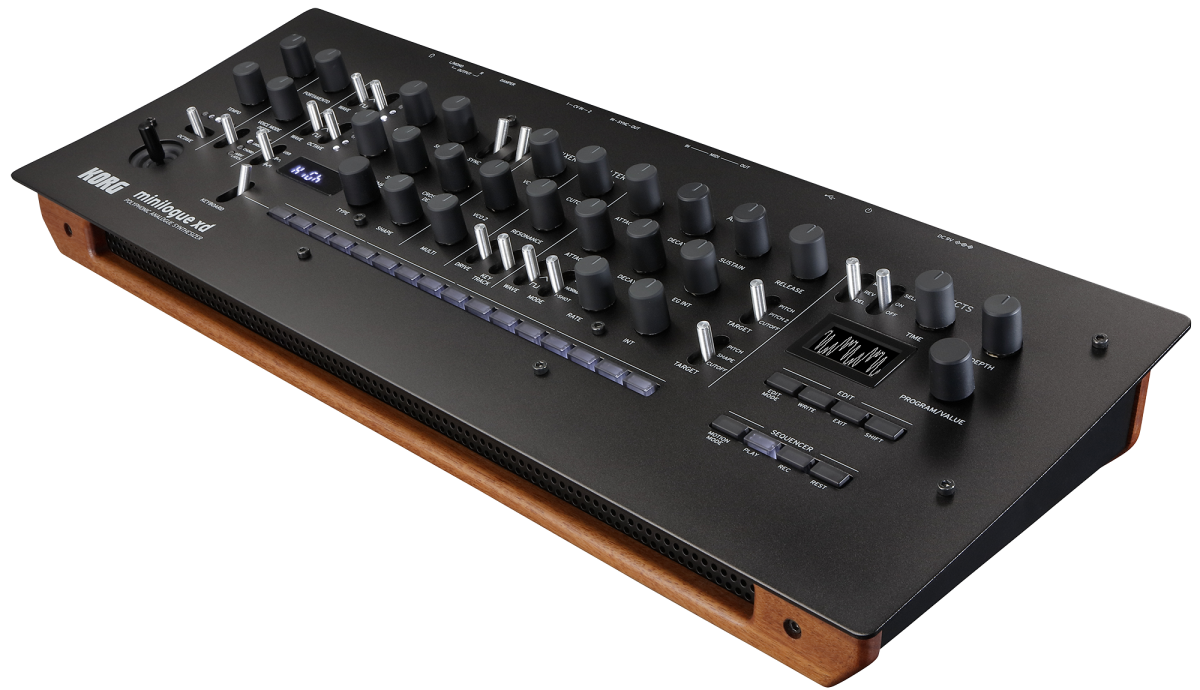
The Korg minilogue xd module ($499, occasionally less) is a four-voice polyphonic synth in a desktop format that combines analog oscillators with a digital multi-engine, a programmable effects section, and the customizable oscillator framework that makes the NTS-1 so interesting. It’s the most musical-sounding budget polyphonic synth currently in production.
If you’ve reached this tier and still aren’t sure which to pick, the Bass Station II is the safest bet for most songwriters, and the Yamaha Reface DX is the most inspiring “I want to write a song right now” instrument in the entire budget category.
The Software Synth Alternative
If your three-hundred-dollar budget is being pulled in five directions, it’s worth knowing that the free software synth world has gotten remarkable. Vital is a free wavetable synth that competes with paid plugins costing hundreds of dollars. Surge XT is a free open-source synth with an enormous sonic range. Dexed is a free recreation of the Yamaha DX7, the most famous FM synth ever made. u-he Tyrell N6 is a free analog-modeling synth with genuine warmth.
Software synths are less inspiring on average than hardware for a specific reason: they live inside your laptop, which is also where your distractions live. Picking up a hardware synth means leaving the computer, which means leaving the place where you check email and read the news. That single ritual is often the actual mechanism of “instant inspiration.” A free synth on your laptop can absolutely produce great songs, but a hundred-dollar hardware synth on your desk will, on average, produce more of them.
That said, if you’re already producing entirely in a DAW and your workflow is tight, adding a software synth costs you nothing and broadens your palette. Start with Vital and Dexed. They cover an enormous amount of sonic territory between them.
Common Mistakes Budget Synth Buyers Make
The first and most common mistake is buying based on specifications rather than character. A synth with more oscillators, more voices, and more parameters is not inherently more inspiring than a simpler one. They are frequently less inspiring, because the parameter density invites menu-diving instead of playing. Buy character first. Specifications second.
The second mistake is buying a synth that requires too much infrastructure. A synth without speakers, without a sequencer, and without battery power demands an interface, a DAW, a controller, and a session of cabling before you can hear a note. By the time you’re set up, the song idea has evaporated. Synths with built-in speakers, sequencers, and battery power are the “instant inspiration” winners precisely because they remove infrastructure friction.
The third mistake is buying too many synths. A single budget synth that you know intimately will produce more songs than three budget synths you know superficially. The optimal collection for a songwriter is one or two carefully chosen instruments that you keep on your desk, learn deeply, and treat as compositional partners. Add a third only when you can clearly articulate the sonic gap the first two leave.
The fourth mistake is treating the synth as a finishing instrument when it’s a writing instrument. The synth’s job in your studio is to give you ideas. Whether the final recording uses the actual synth track or a re-recorded version with a more expensive instrument is a separate question. And one that doesn’t matter at the writing stage. Don’t overspend trying to buy the synth that will sound great on the final master. Buy the synth that will help you write the song.
Frequently Asked Questions
Is a synth necessary for songwriting?
No. Plenty of great songwriters never touch a synthesizer. But for writers who feel stuck in their existing instrument’s habits, a synth is one of the fastest ways to escape those habits, which is why so many writers across genres end up owning one.
Should I get a polyphonic or monophonic synth?
A monosynth is simpler, cheaper, and forces you to write bass lines, leads, and arpeggios, all of which are useful constraints. A polysynth lets you play chords and pads, which opens up a wider compositional range. If you’re a guitarist looking for a complement to your existing instrument, a monosynth is often the better first purchase. If you’re a pianist or producer, a polysynth is more immediately useful.
Do I need a MIDI controller, or can the synth play itself?
Most of the synths recommended in this guide have either keys or a sequencer of their own, so you don’t need a separate controller for inspiration purposes. If you have a MIDI controller already, you can drive any of these synths from it for a more comfortable playing experience.
How does a synth fit into a guitar-based songwriting workflow?
As a sketching tool. Many guitarists write the bones of a song on guitar and use a synth to add a bass line, a pad, or a hook melody that wouldn’t have occurred to them on the original instrument. The synth doesn’t replace the guitar; it extends what the song can become.
Used or new?
Korg Volcas, Behringer products, and most Roland Aira Compacts hold their value reasonably well, so used purchases can save twenty to thirty percent without much risk. Arturia MicroFreaks and Yamaha Refaces hold value especially well. Avoid used Pocket Operators if you can help it; they have small components that can fail with heavy travel.
A Final Word
A synth on your desk changes how often you finish songs, not because it makes you a better musician but because it gives your songwriting brain a different room to play in. Pick one. Plug it in. Don’t read the manual. Turn the knobs until something catches your ear. Hum a melody over it. Record a phone voice memo. Start a song.
The synth that produces ideas is the synth you actually use, and the synth you actually use is the one with the lowest possible distance between “I have an idea” and “I’m hearing it.” Every recommendation in this guide is engineered to minimize that distance. Spend a hundred dollars or four hundred. Either way, you’ll write songs you wouldn’t have written otherwise.