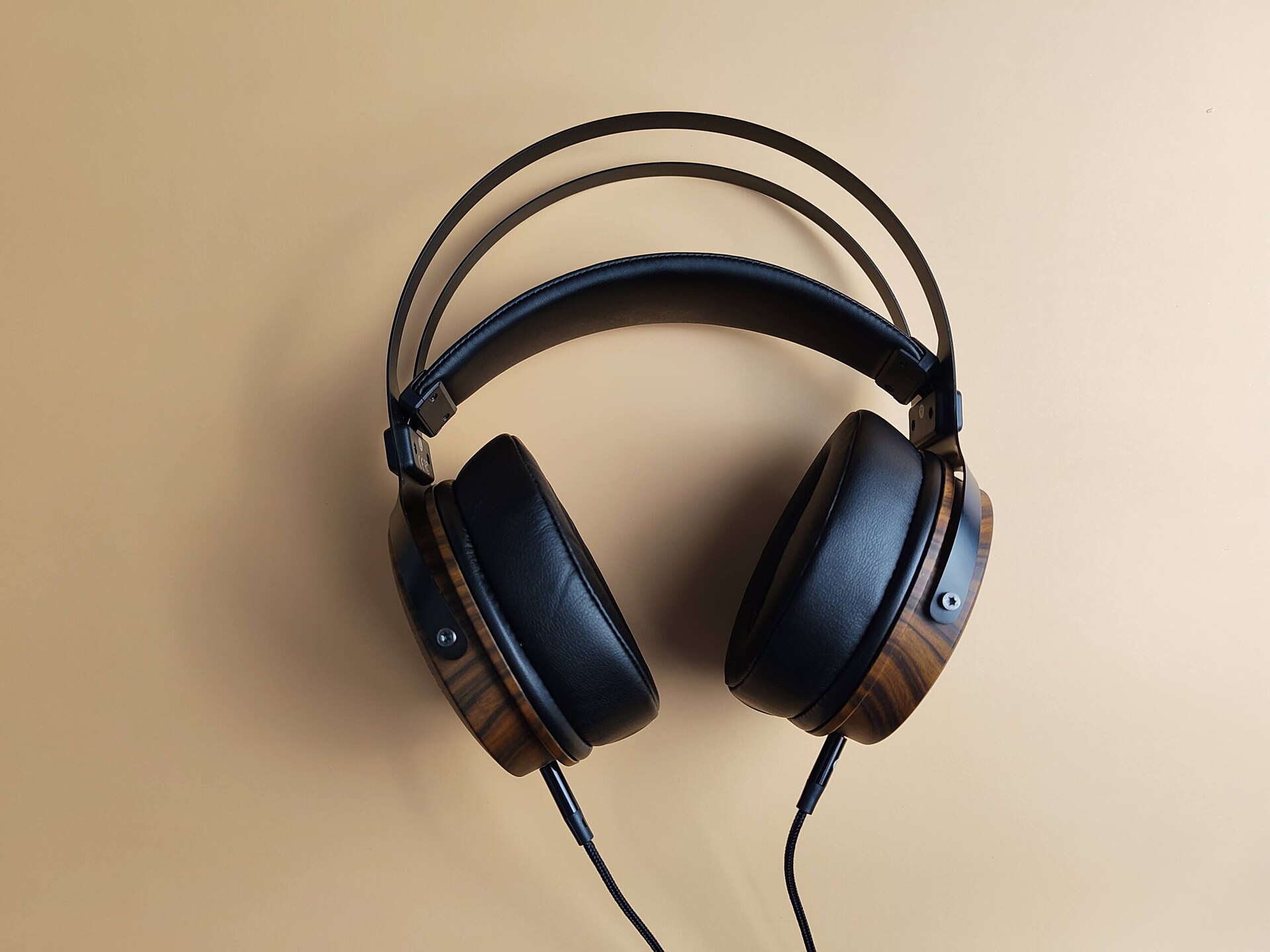

I. Introduction: The Cable Is Not the Point
The most repeated piece of advice in consumer audio is that wired headphones sound better than wireless ones. The advice is, broadly, correct. But it is correct for a reason that is almost never stated accurately, and the inaccuracy matters, because it leads buyers to value the wrong thing.
The cable does not improve the sound. The copper conductor between a modern source and a modern headphone contributes essentially nothing audible to the result. What the wired format provides is not a sonic property of the wire but a structural property of the product: a wired headphone, at a given price, devotes a far larger share of that price to the parts that actually produce sound. This is a budget-allocation advantage, not an acoustic one — and recognizing the difference is the single most useful thing a buyer can do.
This guide answers six questions that a wired-headphone buyer should be asking. What most determines quality, How wired compares to wireless in sound, and whether any remaining gap still matters. Which listeners and use cases benefit most from wired models. What a buyer should realistically expect to spend for a “great” pair, and what is traded away at each price tier. What role specifications such as drivers and frequency response play for an everyday user. And which design elements (comfort, build quality, cable type) are routinely overlooked but decisive over the life of the product.
The argument is evidence-led where evidence exists, and it draws on the published acoustics and psychoacoustics literature, in particular the loudspeaker and headphone research associated with Floyd Toole and with the Harman International listening studies of Sean Olive and Todd Welti. It also tries to be honest about the limits of the wired case: for a large number of listeners, a wireless headphone is not a compromise but the correct choice.
II. Where the Money Goes: What Most Determines Quality
Consider a wired headphone and a wireless headphone at an identical retail price. They are frequently described as the same product with one difference — a cable instead of a radio. This description is wrong, and the way it is wrong is the key to the entire subject.
A wireless headphone must contain, and must therefore pay for, a substantial quantity of hardware that has nothing to do with reproducing sound. A rechargeable lithium-ion cell. A Bluetooth system-on-chip and its antenna. Licensing fees for the audio codecs it supports. In most modern models, an active-noise-cancelation subsystem with its own microphones, analog-to-digital conversion, and processing. Each of these consumes both component cost and fixed engineering effort. Independent teardowns and cost analyses of wireless headphones consistently show that this non-acoustic content occupies a meaningful fraction of the bill of materials and a meaningful fraction of the development budget.
A wired headphone carries none of that load. The same retail price flows, almost in its entirety, into the components that move air (the driver, the earpads and their acoustic behavior, the chassis) and into the engineering hours spent tuning the result. This is the wired advantage, correctly stated. It is not that copper outperforms radio. It is that a wired headphone is an honest container: the money you spend on it is the money spent on sound.
It follows that the most important factor in choosing a wired headphone is not any single specification. It is the structural recognition that, dollar for dollar, the wired purchase buys more transducer and less electronics. Every other consideration in this guide )fit, the open-or-closed-back decision, the specific frequency tuning, the build) operates downstream of this one. The buyer who internalizes it will, almost automatically, evaluate candidates correctly: by asking what share of the price reached the parts that matter.
III. Wired versus Wireless: The Real Shape of the Gap
The popular framing of the wired-versus-wireless question assumes that the gap is a compression gap — that Bluetooth discards audio data and a wired connection does not. Fifteen years ago this was a strong argument. Today it is a weak one.
Modern Bluetooth codecs (AAC, the aptX family, LDAC, and the newer LC3) are competent. Under controlled, level-matched, blind listening conditions, lossy compression at contemporary bitrates is close to transparent for most listeners, on most material. The codec is rarely the limiting factor. The honest conclusion is that the wired-versus-wireless difference is not, in the main, a compression difference.
The real gap has two components. The first is the budget-allocation gap described above: at equal price, the wired headphone has simply spent more on its transducer, and this is audible. The second is a set of three concrete, non-sonic factors. Latency: a wired connection has effectively none, while Bluetooth introduces a delay that, though much reduced in recent years, still matters for video, gaming, and live monitoring. The codec lottery: the codec actually used is negotiated between source and headphone, and the listener does not fully control it. And battery dependence: a wireless headphone contains a consumable cell with a finite cycle life and a fixed eventual failure, while a wired headphone has no battery to degrade.
Does the gap still matter? The accurate answer is that the gap is a constant and its relevance is a variable. For a commuter listening to speech or popular music on a loud train, the gap is real but practically irrelevant: the ambient noise floor swamps it, and active noise cancelation — which only wireless models deliver well — improves the actual listening experience far more than any transducer refinement would. For a listener seated in a quiet room, attending deliberately to the music, the same gap is both real and readily audible. Neither listener is wrong. They are simply different listeners, and the gap means different things to each.
IV. Who Should Buy Wired: Listeners and Use Cases
Several categories of listener benefit clearly and consistently from wired headphones.
The first is anyone who produces, mixes, or masters audio. For this work, latency must be near zero, the reference must be consistent from session to session, and the connection must never drop. The second is musicians, who monitor their own playing in real time and for whom even small delays are disqualifying. The third is gamers, for whom latency and positional accuracy are not conveniences but competitive factors. The fourth is the attentive or critical listener — the person who sits down for the express purpose of listening, in a quiet space, and who will therefore actually perceive the budget-allocation gap. The fifth, and largest, is the value-maximizer: the buyer whose first priority is the greatest quantity of sound quality per unit of money, regardless of format.
Several categories of listener should not prioritize wired headphones. The commuter who needs active noise cancelation is better served by a good wireless model, because the wired category does not address that need well. The runner and the gym user are poorly served by a cable, which is a genuine snag hazard. And the buyer whose telephone has no headphone jack, and who will not reliably carry an adapter, should weigh that friction seriously. For these listeners, wireless is not a lesser choice. It is the correct tool for the job.
V. What the Research Says: Target Response and Listener Preference
Before turning to specifications, it is worth establishing what the published research actually shows about headphone sound quality, because that research overturns a common assumption — namely, that preference is hopelessly subjective and that no general guidance is possible.
The relevant work begins with the loudspeaker research synthesized by Floyd Toole, which established that listener preference among loudspeakers, tested blind, is far more consistent than the audio hobby assumes, and that it correlates strongly with measurable behavior — broadly, a smooth and neutral frequency response.
Beginning around 2012, Sean Olive and Todd Welti, working at Harman International, extended this program to headphones. Headphones pose a special difficulty: unlike a loudspeaker in a room, a headphone couples directly to the ear, and is measured not in a room but on a standardized ear simulator. A simple flat response measured at the eardrum is not what listeners prefer. Olive and Welti ran a sustained series of controlled, blind listening experiments to determine what response shape listeners do prefer. The result — now widely referred to as the Harman target — is a specific, gently contoured curve with a defined low-frequency emphasis and a characteristic presence-region shape, corresponding approximately to what a well-designed, neutral loudspeaker system produces at the listener’s ear in a good room.
The finding that matters for a buyer is the consistency. Across listeners of different ages, different listening experience, and different geographic regions, preference converged on broadly the same target. Headphones whose measured response tracks that target tend to be preferred; headphones that deviate from it tend to be preferred less. This does not abolish individual taste — some listeners prefer more bass, some less — but it establishes that headphone sound quality is substantially predictable, and that the predictor is the shape of the frequency response across the audible band. That shape is the single most informative thing one could know about a headphone. It is also, as the next section shows, almost never the thing the box tells you.
VI. Reading the Spec Sheet: Drivers, Frequency Response, Impedance
The most prominent specification on a headphone box is usually a frequency-response figure: “20 Hz – 20,000 Hz,” or, on more aggressive marketing, a far wider range such as “5 Hz – 40,000 Hz.” For an everyday user, this figure is close to uninformative.
The nominal limit of healthy young human hearing is roughly 20 Hz to 20 kHz, and the upper bound falls with age — often well into the mid-teens of kilohertz by middle adulthood. Energy reproduced above the audible ceiling cannot be heard; energy below roughly 20 Hz is felt more than heard and is sparse in most musical material. A wide quoted range therefore advertises output the listener cannot use. More importantly, the range is a statement about the extremes of reproduction and says nothing about behavior within the audible band — and it is the behavior within the band, the response shape discussed above, that determines whether a listener will like the headphone. A frequency-response range with no accompanying response curve is, for practical purposes, marketing.
Driver information is more interesting but still widely misread. The relevant variable is driver type, not driver size. Most headphones use a dynamic, or moving-coil, driver: a mature, well-understood design that spans the full quality range from inexpensive to world-class. Planar-magnetic drivers, more common at higher prices, drive a thin diaphragm evenly across its surface, which tends to yield low distortion and rapid transient response; they are also typically heavier and less efficient, requiring more power. Electrostatic drivers, rarer and costlier, require a specialized energizing amplifier. None of these types is categorically “best.” And driver size — 40 millimeters, 50 millimeters — is a tuning and design parameter, not a quality rating. A larger figure is not a better headphone; it is a different engineering choice.
Two specifications, however, are genuinely actionable, and an everyday user should read them. Impedance, measured in ohms, and sensitivity, a measure of loudness per unit of power or voltage, together determine whether a headphone can be driven adequately by a given source. Low-impedance, high-sensitivity headphones perform well directly from a telephone, a laptop, or a small adapter. High-impedance or low-sensitivity headphones — and several of the finest wired headphones are deliberately high-impedance — need a dedicated headphone amplifier to reach their intended performance. This is not a defect. It is a requirement, disclosed on the box, that the buyer must read and, if necessary, budget for. Of all the numbers printed on a headphone, impedance and sensitivity are the two that should actually change a purchasing decision.
VII. What “Great” Costs: Price Tiers and Their Tradeoffs
How much should a buyer realistically expect to spend for a genuinely great wired headphone? The honest answer is less than the audio hobby implies, and the reason is again the budget-allocation principle: because a wired headphone spends nearly all of its price on sound, the price required for excellence is lower than for an equivalent wireless model. The figures below are approximate, in US dollars, and stated as tiers rather than exact prices, because street prices fluctuate and vary by region.
At the entry tier — roughly 20 to 60 dollars — wired headphones are markedly better than the price would suggest. There are genuinely competent options here. What is traded away is refinement, durability, and, almost always, replaceable parts: these are headphones that perform well but cannot easily be maintained, and so they age out rather than last.
The middle tier — roughly 150 to 300 dollars — is where “great” begins, and it is the honest answer to the question. Headphones in this range from established manufacturers are used as working references in professional recording studios, and have been for decades. The Sennheiser HD 600 family is the canonical example: a reference-grade headphone in approximately this price band, substantially unchanged for some thirty years because it did not need changing. A buyer who spends here, chooses sensibly, and maintains the product has bought an endpoint, not a stepping stone.
The upper-middle tier — roughly 300 to 700 dollars — buys refinement: more resolving drivers, better materials, more comfortable assemblies. The improvements are real, but they are incremental, and they obey a clear law of diminishing returns. Beyond roughly 1,000 dollars, the buyer has entered the territory of luxury and sharply diminishing returns: these headphones are better, but not proportionally better, and the premium purchases the last few percent of performance along with craftsmanship, materials, and exclusivity.
The tradeoff has the same shape at every step: each tier upward buys a smaller sonic gain for a larger sum. For most listeners, the curve flattens noticeably somewhere around the 200-to-300-dollar mark. Spending beyond it is a legitimate and defensible choice — for build, comfort, longevity, or simple pleasure of ownership — but it should be made as a choice, not in the mistaken belief that great sound is unavailable below it.
VIII. The Headphone-Jack Problem and the DAC Question
Any contemporary discussion of wired headphones must address an inconvenient fact: a large share of modern telephones no longer include a 3.5-millimeter headphone jack. For the buyer of wired headphones, this is a real consideration, though a manageable one.
There are two practical paths. The first is an adapter — a small external digital-to-analog converter, commonly terminating in a USB-C plug, that restores a headphone jack to a jackless device. Such adapters range from inexpensive and merely adequate to modest in price and genuinely good; even a good one is far cheaper than the sound quality it enables. The second path is a headphone that terminates natively in USB-C, with its digital-to-analog conversion built in. Both paths work. The buyer’s task is simply to confirm, before purchase, how the chosen headphone will connect to the devices actually owned — and to treat the small cost of a competent adapter as part of the budget rather than as an unwelcome surprise.
The jack’s disappearance does not undermine the case for wired headphones. It adds one inexpensive component to the system. It does, however, reinforce a point from the section on use cases: a buyer who finds the very idea of carrying an adapter intolerable has identified a genuine reason to consider wireless instead, and should weigh that honestly.
IX. The Overlooked Design Elements: Comfort, Build, and the Cable
The specifications a buyer reads and the design elements that determine long-term satisfaction are largely different sets. The elements below appear in no review headline and on no spec sheet, yet they decide whether a headphone is still in use, and still loved, after five years.
Begin with the cable, since it is the element the buyer is most likely to underrate. The decisive question is whether the cable is detachable. A fixed, permanently attached cable is the most common failure point of any headphone: it flexes with use, fatigues at its strain points, and eventually fails — and when a fixed cable fails, the headphone often fails with it. A detachable cable converts that catastrophe into the minor expense of a replacement. The buyer should also prefer a standard connector over a proprietary one, so that the replacement market remains open, and should consider the practical attributes of the cable itself: its length, suited to the actual listening position; whether it is straight or coiled; and its microphonics — the degree to which the cable transmits handling and clothing noise up into the earcups.
Comfort is the next underrated element, and it is not a luxury: it is the difference between a headphone that is used and one that is set aside. Three attributes deserve direct attention. Clamping force — the inward pressure of the earcups — must be sufficient to maintain a seal but not so great as to cause fatigue or headache. Weight, and crucially its distribution across the headband, determines how a headphone feels after an hour rather than a minute. And the earpads merit specific scrutiny: their depth, so that the ear is not pressed against the driver, and their material — velour breathes and stays cool but seals less firmly; synthetic leather seals well and reinforces bass but runs warm and, over years, degrades and flakes.
This last point generalizes into the most overlooked fact in the category: earpads are consumable. They compress, harden, and break down with use, and as they do, the acoustic seal — and therefore the sound — changes. A headphone with replaceable earpads, supported by a continuing supply of replacements, can be restored to original condition for a small sum. A headphone with bonded or discontinued pads cannot, and will degrade on a fixed schedule regardless of the quality of its driver.
Build quality follows the same logic, and it is widely misjudged. The meaningful question is not metal versus plastic — well-chosen plastic outlasts poorly-chosen metal. The meaningful questions are whether the genuine stress points are robust (the headband yoke and hinges, the cable entry, the adjustment mechanism) and whether the manufacturer sells replacement parts at all. The most durable headphones are not the most expensive ones. They are the ones that can be repaired — and a manufacturer’s parts catalogue is a more reliable predictor of longevity than the marketing language on the box.
X. Open-Back versus Closed-Back: A Decision That Outranks the Spec Sheet
One design decision outranks every specification, and a first-time buyer who gets it wrong will have bought the wrong headphone regardless of how good that headphone is: the choice between an open-back and a closed-back design.
An open-back headphone allows air and sound to pass freely through the rear of the earcup. This tends to produce a more spacious, more natural presentation, and many listeners find it less fatiguing over long sessions. The cost is total absence of isolation in both directions: people nearby hear the music clearly, and the listener hears the surrounding environment. An open-back headphone is suited to a quiet, private room and to little else.
A closed-back headphone seals the rear of the earcup. It isolates — keeping the music in and the environment out — which makes it the correct choice for an office, a commute, a shared space, or recording in a studio, where sound leaking from the headphones into a microphone would be unacceptable. Its presentation can feel somewhat more enclosed than an open design’s, though good closed-back headphones narrow that difference considerably.
This is not a matter of quality and it is not a specification. It is a decision about where the headphone will physically be used, and it must be made first, before budget, before driver type, before anything else. Purchasing an open-back headphone for use in an open-plan office, or a closed-back headphone in the belief that it must be acoustically inferior, are among the most common and most avoidable mistakes in the category.
XI. A Decision Framework
The preceding analysis reduces to a short, ordered framework. Taken in sequence, it will lead most buyers to a sound decision.
Decide, first, where the headphone will actually be used, and from that decide open-back or closed-back. Set a budget next, informed by the knowledge that the genuine sweet spot lies near 150 to 300 dollars and that spending beyond it buys refinement subject to clear diminishing returns. Read the impedance and sensitivity, match them to the source, and budget for a headphone amplifier or a competent digital-to-analog adapter if either the headphone or the source requires it. Insist, wherever possible, on a detachable cable and on replaceable earpads, and check whether the manufacturer sells spare parts. Confirm how the headphone will connect to the devices actually owned. And disregard the frequency-response range printed on the box: it is the most prominent specification and the least informative, and the response shape that genuinely predicts preference is, regrettably, almost never disclosed.
A buyer who follows this sequence will not necessarily own the most expensive headphone available. They will own the one whose price was spent, as fully as possible, on sound — and that, restated one final time, is the whole of the wired case.
XII. Conclusion
Wired headphones generally do sound better than wireless headphones at the same price. The reason is not the cable, which is acoustically inert, and is not lossy compression, which modern codecs have rendered close to transparent for most listening. The reason is structural: a wired headphone, unburdened by a battery, a radio, codec licensing, and noise-cancelation hardware, spends nearly the whole of its price on the transducer and the materials around it. It is an honest container for the buyer’s money.
From that single fact the rest of the guidance follows. The gap with wireless is real at equal price, but its practical importance depends entirely on the listener and the listening environment. Wired headphones reward those who produce, perform, game, listen critically, or simply want the most sound per dollar — and wireless remains the correct tool for those who need noise cancelation, freedom of movement, or release from adapters. “Great” begins at a price most buyers will find lower than expected. The specifications that dominate the box predict little; impedance and sensitivity are the exceptions worth reading. And the elements that decide long-term satisfaction — a detachable cable, replaceable earpads, honest comfort, a repairable build, the open-or-closed-back decision — are precisely the ones the marketing omits.
The well-chosen wired headphone is not an exercise in nostalgia for a cable. It is a deliberate decision to convert money into sound with as little lost along the way as possible. Understood that way, the choice is not difficult. It is simply a matter of knowing what one is actually buying.
Selected Bibliography
International Electrotechnical Commission. IEC 60318-4:2010, Electroacoustics — Simulators of Human Head and Ear, Part 4: Occluded-Ear Simulator. Geneva: IEC, 2010.
International Organization for Standardization. ISO 226:2003, Acoustics — Normal Equal-Loudness-Level Contours. Geneva: ISO, 2003.
Moore, Brian C. J. An Introduction to the Psychology of Hearing. 6th ed. Leiden: Brill, 2012.
Olive, Sean E., and Todd Welti. “The Relationship between Perception and Measurement of Headphone Sound Quality.” Audio Engineering Society 133rd Convention, San Francisco, 2012. Convention Paper 8744.
Olive, Sean E., Todd Welti, and Elisabeth McMullin. “Listener Preference for Different Headphone Target Response Curves.” Audio Engineering Society 134th Convention, Rome, 2013. Convention Paper 8867.
Toole, Floyd E. Sound Reproduction: The Acoustics and Psychoacoustics of Loudspeakers and Rooms. 3rd ed. New York: Routledge, 2017.