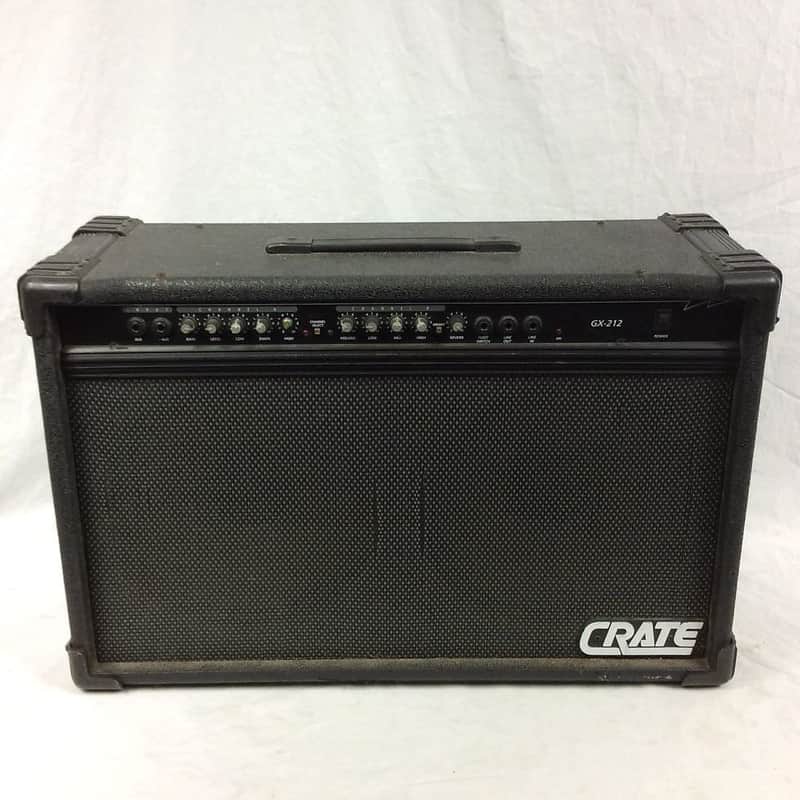

The Crate GX-212 is a solid-state guitar combo amplifier from the 1990s to early 2000s, known for its high power output and versatility in rock and metal genres.
It’s known as a reliable, budget-friendly option for beginners and intermediate players, though its sound quality can vary based on personal preferences and modifications.
It typically features 115-120 watts of power, dual 12-inch speakers, and basic effects like spring reverb, making it loud enough for small gigs but potentially overwhelming for home practice without attenuation.
Key Specifications
- Power and Design: 115-120 watts RMS, solid-state, 2×12″ Crate custom speakers.
- Channels and Controls: Two or three channels (clean, overdrive, sometimes solo), with EQ, gain, shape knob for tone sculpting, and spring reverb.
- Dimensions and Weight: Approximately 21″ H x 26.5″ W x 11″ D, weighing around 50 lbs.
- Additional Features: Footswitch compatibility for channel switching, effects loop/insert jack, extension speaker output.
Pros and Cons
The GX-212 is praised for its durability and volume, but it may lack the warmth of tube amps.
Pros: Extremely loud and punchy for its price; good distortion for rock/metal; built tough for gigs; affordable used (often $100-200).
Cons: Heavy and hard to carry; clean tones can sound bass-heavy or processed; distortion may be fizzy without tweaks or upgrades; effects (if present) are basic and not as refined as modern units.
Buying and Usage Tips
If considering a used GX-212, inspect for speaker wear, humming (possible capacitor issues after 20+ years), and scratchy pots—common in vintage solid-state amps.
It’s best for practice spaces or small venues, and pairs well with pedals for enhanced tones. Check platforms like Reverb or eBay for deals, and verify the model variant (e.g., GX vs. GFX for added digital effects).
For maintenance, clean with a lint-free cloth and avoid headphones in speaker jacks to prevent damage.
The Crate GX-212 guitar amplifier represents a classic entry in the budget-friendly solid-state category, produced by Crate Amplifiers during a period when the company was emphasizing affordable, high-power options for aspiring musicians.
Crate, founded in 1978 in the United States, initially gained traction with durable, no-frills amps aimed at rock and metal players. By the 1990s, the GX series emerged as part of their push into versatile combos that could compete with brands like Peavey and Marshall in the entry-level market.
The GX-212, manufactured roughly from the early 1990s to 2003, was designed for semi-professional use, offering robust volume without the maintenance demands of tube amps.
After Crate’s acquisition by St. Louis Music in the late 1990s and later by Loud Technologies in 2005, production shifted, and models like the GX-212 were phased out in favor of newer lines. Today, it’s a vintage piece often sought for its underrated performance in high-gain scenarios, though availability is limited to the used market.
At its core, the GX-212 is a solid-state combo with 115-120 watts RMS of power, driving two 12-inch Crate custom speakers for substantial projection—enough to cut through band mixes in small to medium venues or rehearsals. Its black Tolex covering and rugged build contribute to a weight of about 50 pounds, making it portable for short distances but cumbersome for frequent transport without wheels or assistance.
Dimensions are compact for its class at approximately 21 inches high, 26.5 inches wide, and 11 inches deep, fitting easily in most vehicles.
The amp operates on standard 120VAC power, with variants for international voltages (100/115VAC or 230VAC).
The control layout emphasizes simplicity and functionality. The front panel includes a single input jack for guitars, followed by the overdrive channel controls: two gain settings (Gain 1 for milder distortion, Gain 2 for higher saturation), level, low EQ (11dB at 80Hz), a proprietary Shape knob for midrange sculpting, and high EQ (10dB at 10kHz).
The clean channel offers volume, low EQ (22dB at 80Hz), mid (14dB at 600Hz), and high (28dB at 10kHz). A shared spring reverb adds depth, controllable via a dedicated knob and footswitchable in some setups.
Channel selection is manual or via an included three-button footswitch, which also toggles the Shape circuit and DSP effects (if equipped—some variants include basic digital signal processing for reverb, chorus, or delay).
Rear panel connections include an insert jack for effects loops (tip=send, ring=return), a footswitch jack, and an extension speaker output wired in series with the internals (minimum 4 ohms impedance). A power LED and on/off switch complete the interface.
Sound-wise, the GX-212 excels in high-volume scenarios, where its FlexWave 5 preamp simulates tube-like distortion for “buttery” overdrive and sustain suitable for blues, rock, and metal.
The amp features crisp cleans at moderate levels, but the clean channel can become bass-dominant or muffled when turned down, making it less ideal for bedroom practice.
The overdrive shines with the Shape knob, allowing tones from crunchy Marshall-esque rhythms to scooped metal leads, often described as “punchy” and “aggressive.”
However, as a solid-state amp, it lacks the organic warmth of tubes, with some calling the distortion “fizzy” or “sterile” without pedals or speaker upgrades (e.g., swapping to Celestions).
Total system gain reaches up to 110dB in overdrive mode, ensuring ear-splitting volume even at half power. Suggested settings from the manual include clean (all EQ at 5, volume at 3), blues (overdrive gain at 4, shape at 6), rhythm (gain at 6, low at 8), and lead (gain maxed, shape at 4).
The amp is reliable, with many noting it withstands years of abuse without breakdowns—attributed to its sturdy chassis and quality components. Common praises include its value as a “steal” for under $400 new (historical MSRP around $500-600) or $100-200 used, making it a solid upgrade from starter amps.
It’s often called “underrated” for mimicking pricier amps like the Ampeg VH140 in high-gain territory. On the flip side, its weight draws frequent complaints, with sharp edges causing discomfort during carry; adding casters is a popular mod.
Effects, when present (as in GFX variants), are functional but require tedious tweaking and may sound “cheesy” live. Common issues include footswitch LED failures, speaker disconnection challenges for mods, and age-related capacitor wear leading to hum—budget $50-100 for servicing. Overall, aggregated ratings from sites like Audiofanzine give it 4.3/5, with 63% awarding top marks for power and durability.
In comparisons, the GX-212 stacks up against contemporaries like the Peavey Bandit 112 (similar power, more versatile channels) or Fender Princeton Chorus (cleaner tones but less gain).
It’s louder than smaller Crate models like the GX-65 but lacks the digital effects depth of the GFX-212 or GLX212 variants, which add 16 DSP options and illuminated panels. For tube enthusiasts, it doesn’t match the organic breakup of a Marshall JCM800, but mods like speaker swaps can bridge the gap.
Maintenance is straightforward: Wipe the Tolex with a damp cloth, avoid moisture, and service every 10-15 years for capacitors. Warnings include not using headphones in speaker jacks to avoid hearing damage and ensuring proper impedance for extensions. When buying, prioritize units with original footswitches and test all channels; current used prices average $150-250 on sites like Reverb, with deals as low as $70 for fixer-uppers.
Detailed Specifications Table
can you put this into a table for wordpress: Detailed Specifications Table
| Category | Details |
|---|---|
| Power Output | 115-120 watts RMS @ 5% THD, 4 ohms |
| Speakers | 2×12″ Crate custom design, 4-8 ohms impedance |
| Channels | 2-3 (Clean, Overdrive/Solo) |
| Preamp | FlexWave 5 tube simulation |
| EQ Controls | Overdrive: Low (11dB @ 80Hz), Shape (proprietary), High (10dB @ 10kHz); Clean: Low (22dB @ 80Hz), Mid (14dB @ 600Hz), High (28dB @ 10kHz) |
| Effects | Spring reverb; optional DSP (reverb, chorus, delay in variants) |
| Connections | 1x input, insert jack (effects loop), footswitch jack, extension speaker out |
| Gain | Overdrive: 110dB max; Clean: 58dB |
| Input Impedance | 470k ohms |
| Max Input Signal | 7V peak-to-peak |
| Power Requirements | 120VAC/60Hz, 95VA (variants for 100/115/230VAC) |
| Weight/Dimensions | 50 lbs; 21″ H x 26.5″ W x 11″ D |
| Manufacturing Period | 1990s-2003 |
| Typical Used Price | $100-250 |
Comparisons Table
| Amp Model | Power/Speakers | Key Strengths | Key Weaknesses | Price Range (Used) |
|---|---|---|---|---|
| Crate GX-212 | 120W / 2×12″ | Loud, durable, good metal distortion | Heavy, bassy cleans | $100-200 |
| Peavey Bandit 112 | 80W / 1×12″ | Versatile channels, Transtube tech | Less power for large spaces | $75-150 |
| Fender Princeton Chorus | 50W / 2×10″ | Pristine cleans, built-in chorus | Limited high-gain | $100-250 |
| Crate GFX-212 (Variant) | 120W / 2×12″ | Added digital effects (16 options) | Effects tweaking cumbersome | $150-300 |
| Marshall Valvestate | 80W / 1×12″ | Hybrid tube/solid-state warmth | Dated, noisier | $200-400 |
In summary, the GX-212 suits players seeking an affordable, powerful amp for practice or entry-level gigs, with its strengths in volume and reliability outweighing tonal limitations for many users. For those in genres requiring nuanced cleans, consider pedals or upgrades.
Additional Resources:
Reverb: Crate GX-212 Product Page
Blue Book of Guitar Values: Crate GX212
zZounds: Crate GX212 Amplifier
Audiofanzine: Crate GFX-212 User Reviews
ManualsLib: Crate GX-212 Owner’s Manual
Ultimate-Guitar: Crate GX212 Review