In their 2025 appearance on Jimmy Fallon, 2026 Grammy Award Winning band Turnstile sported the Koss PRO4AA headphones while performing their songs “I Care” and “Dull.” Before we check that out, let’s take a dive into The Koss PRO4AA over-ear headphones, first introduced in 1970, are a classic studio model known for their durability and noise isolation.
Opinions on sound quality vary, however, as some praise their neutral tone while others note harsh treble and limited bass.
- Research suggests they perform best in professional settings like broadcasting or recording, where isolation is key, though they may feel dated compared to modern options in comfort and audio refinement.
- Priced around $80–$115, they come with a limited lifetime warranty, making them a budget-friendly choice for those seeking rugged, long-lasting gear, but comfort issues like clamping force could deter casual listeners.
- Evidence leans toward vintage versions sounding slightly better than newer ones, with users often recommending modifications like pad replacements for improved fit and audio.
- While not universally acclaimed, they hold nostalgic appeal and suit users prioritizing isolation over cutting-edge features, with no major controversies but divided views on whether they outperform contemporary budget headphones.
Overview
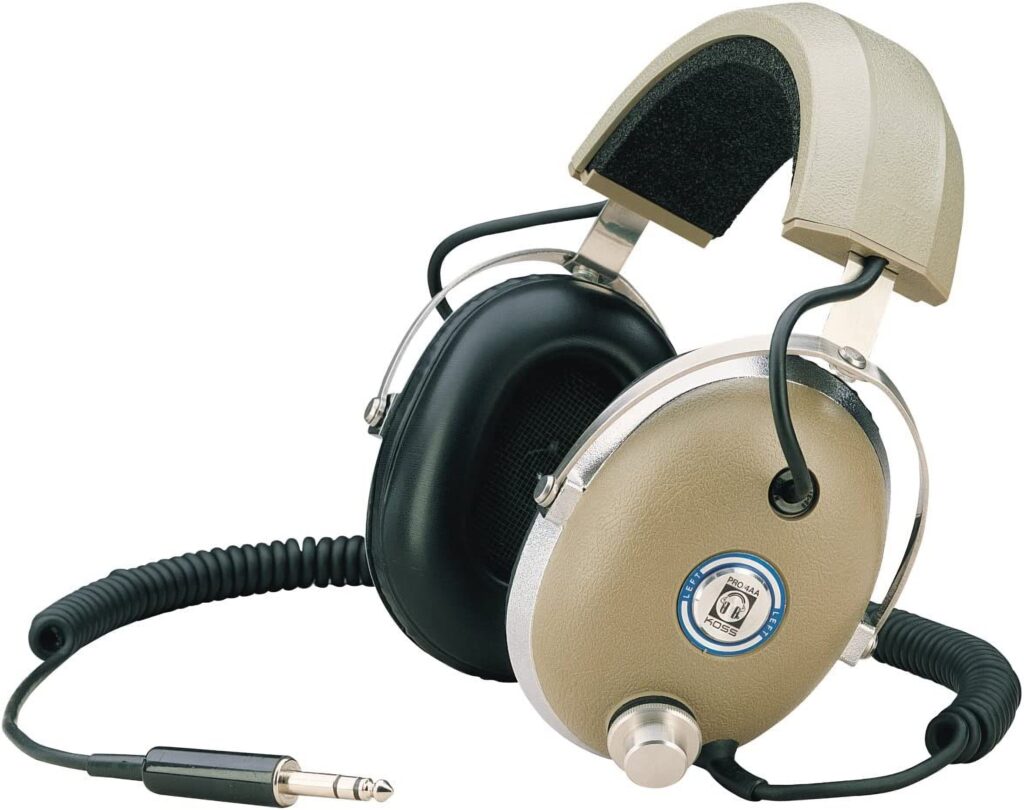
The Koss PRO4AA are closed-back, over-ear headphones designed primarily for studio and professional use. They feature a retro aesthetic with a coiled cable and robust construction, appealing to audiophiles and broadcasters alike.
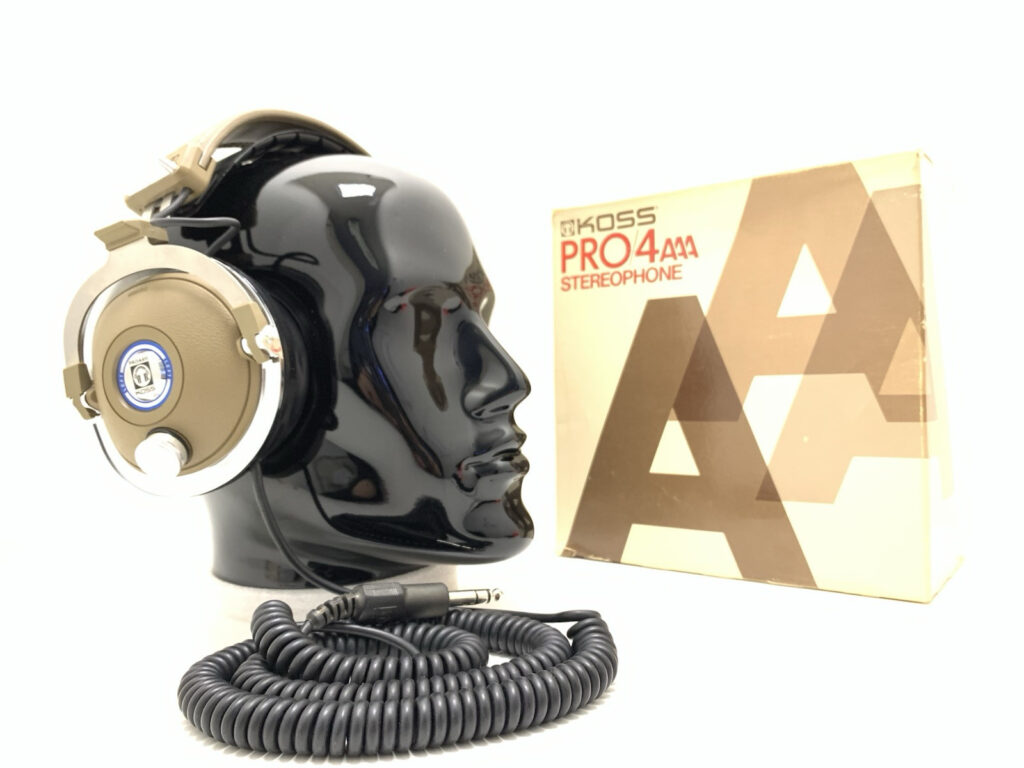
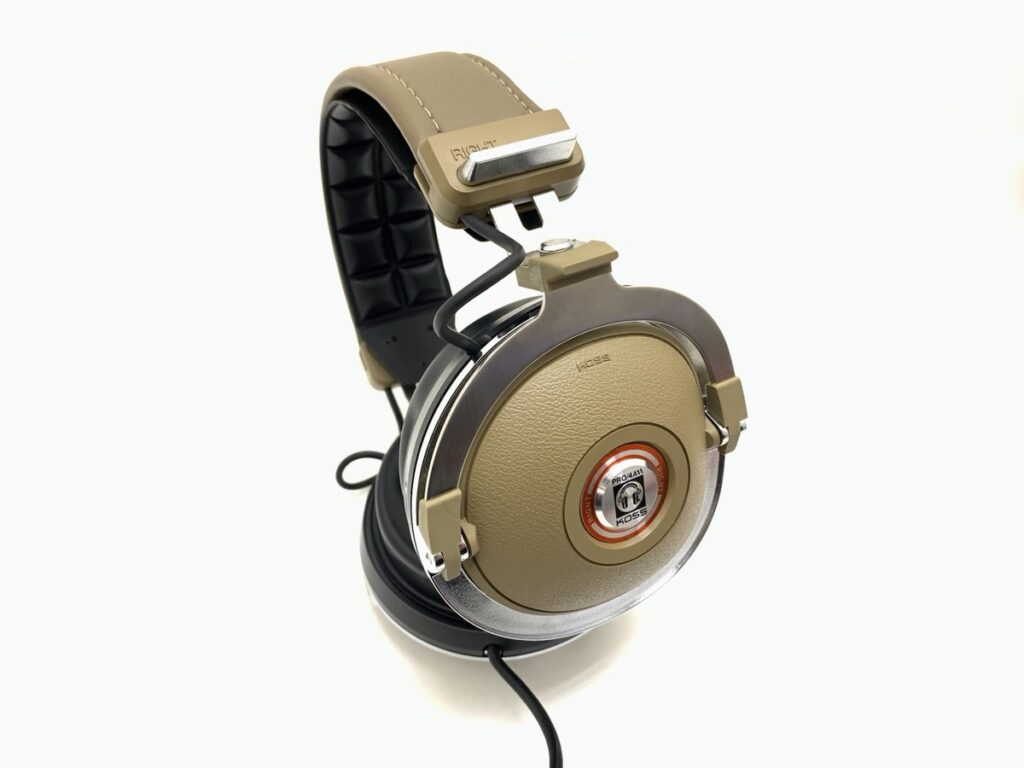
Available in standard black or limited beige editions, they’re often sold out on the official site but can be found on retailers like Amazon or eBay. Here’s a visual reference for their design:
Specifications
These headphones boast a wide frequency response of 10-25,000 Hz, high impedance of 250 ohms (requiring a decent amp for optimal performance), and sensitivity of 95 dB SPL/1mW.
They include an 8-foot coiled cord with a single-entry design and low total harmonic distortion under 0.1%. No wireless connectivity or active noise cancellation—purely analog and wired.
Sound and Performance
Sound is described as neutral-bright, with accurate reproduction but potential spikes in treble that can feel sharp on certain tracks. Bass is tight but subdued, mids can seem congested, and they excel in isolation for immersive listening. Users note they sweeten lower-quality audio like MP3s but may require burn-in or EQ adjustments.
Comfort and Build
Built like a tank with metal reinforcements and thick plastic, they’re durable but heavy (around 21 oz) with strong clamping force. Earpads may cause discomfort after extended wear, though some adapt over time or replace them.
Who Should Buy Koss PRO4AA Headphones?
Ideal for studio pros, radio enthusiasts, or nostalgia seekers on a budget—check availability on https://koss.com or major retailers. If comfort is a priority, consider alternatives like the Koss Porta Pro for a lighter option. Warranty covers defects with registration.
The Koss PRO4AA over-ear headphones represent a cornerstone in audio history, first launched in 1970 as one of the earliest dynamic headphones to offer full-frequency response and high-fidelity performance in a professional context.
Retired briefly in the late 1980s, they were revived due to persistent demand from broadcasters, recording engineers, and audiophiles who valued their reliability in demanding environments.
They remain a staple for those seeking unadorned, analog audio gear without modern frills like Bluetooth or app integration, priced typically between $80 and $115 depending on the retailer, edition, and condition.
While not without flaws—such as variable comfort and sound that some find dated—their enduring popularity underscores a niche appeal in an era dominated by wireless consumer models.
Historical Context and Design Evolution
Koss, an American company founded in 1953, pioneered stereophones with models like the PRO4 series, which quickly became studio standards in radio and music production during the 1970s.
The PRO4AA, an evolution from earlier variants like the PRO-4 and PRO-4A, incorporated improvements in noise isolation and bass response, making it suitable for live performances and critical listening.
Vintage units from the 1970s often feature fluid-filled ear cushions for better sealing, though these can dry out over time, prompting users to seek replacements. Modern reissues maintain the core design: closed-back cups with a wide rubber headband, foldable for semi-portability, and a coiled 8-foot single-entry cable ending in a 1/8-inch plug with a 1/4-inch adapter.
Weighing about 21 ounces, they’re built with thick plastic, metal accents, and beefy strain relief, contrasting sharply with Koss’s lighter contemporary offerings like the Porta Pro.
Some editions, like the Titanium variant from the early 2000s, added minor tweaks but retained the essence.
| Specification | Details |
| Type | Closed-back, over-ear |
| Frequency Response | 10-25,000 Hz |
| Impedance | 250 ohms |
| Sensitivity | 95 dB SPL/1mW |
| Total Harmonic Distortion | <0.1% |
| Cable | Coiled, 8 ft, single-entry, 1/8-inch with 1/4-inch adapter |
| Weight | Approximately 21 oz (595 g) |
| Warranty | Limited lifetime (requires registration) |
| Price Range | $80–$115 (varies by retailer; often sold out on official site) |
Sound Quality
The PRO4AA’s audio profile is often characterized as neutral-bright, emphasizing clarity and isolation over warmth or deep bass extension. Bass is tight and present but not booming, mids can appear congested (particularly affecting female vocals), and treble features spikes that some describe as grainy or “ice-pick” sharp, potentially fatiguing without EQ.
High impedance means they benefit from amplification; without it, sound may feel lifeless. Positive reviews highlight their ability to reproduce recordings accurately, mimicking live excitement, and they reportedly sweeten compressed files like MP3s better than some modern headphones.
Vintage pairs are frequently praised for superior midrange and clarity compared to new ones, which some find flatter. Noise isolation is a standout, blocking external sounds effectively for immersive sessions, though this closed design introduces resonances that limit soundstage compared to open-back models like Sennheiser HD-600s.
Burn-in (40–80 hours) and tone adjustments (e.g., reducing treble at 8-10 kHz) can tame harshness, making them non-fatiguing for extended use.
Counterarguments from critics include shrieky highs and overall “canned” artificiality, with some preferring budget alternatives like Sony V6 for better balance. User forums such as Reddit and Head-Fi echo this divide: enthusiasts modify them for improved seal and bass, while others return them for discomfort or underwhelming dynamics.
Comfort, Build, and Practicality
Build quality earns high marks for ruggedness—users report surviving decades of abuse, with metal components and solid cable relief outlasting fragile modern designs.
The vise-like clamp and weight can cause ear pain after 1–2 hours, with pads getting hot and sweaty. Adaptations like thicker pads or “on-ear” wear help, but they’re not ideal for casual, all-day listening.
The short cord suits studio setups but may require extensions for home use, and microphonics are minimal.
International shipping is available, but check policies for cancellations.
| Pros from Reviews | Cons from Reviews | Source Examples |
| Excellent noise isolation for focused listening | Heavy weight leads to fatigue | Crutchfield, Head-Fi |
| Durable, rugged build with lifetime warranty | Strong clamping force and hot pads | HifiGuides, Equipboard |
| Neutral sound with good clarity on vintage units | Bright, spiky treble can be harsh | Reddit, Audio Science Review |
| Affordable for professional-grade gear | Short cord limits mobility | CNET, YouTube |
| Sweetens low-quality audio sources | Congested mids and vague bass | Medium, eHam |
User Experiences and Comparisons
Reviews show strong nostalgia: Amazon boasts over 120 four- and five-star ratings for their immersion and value, while detractors cite outdated sound.
On X (formerly Twitter), users share fond memories, like listening to classic tracks in the 1970s, or recent purchases for retro bundles. Comparisons favor them over entry-level cans for isolation but rank them below Sony V6 or Sennheiser HD-600 for musicality.
Even Koss’s own Porta Pro often outperforms in dynamics at a lower price. For ham radio or comms, they’re lauded for clear audio, though not all agree on comfort. Vintage hunting on eBay can yield better-tuned pairs, but verify conditions.
In summary, the PRO4AA bridge vintage reliability with practical utility, best for those who appreciate their heritage and can overlook comfort quirks in favor of solid performance.
And now, Turnstile rocks the Koss PRO4AA headphones:
Check Out The Following Links For More On Koss PRO4AA
CNET Back to the Future Review
Leave a Reply