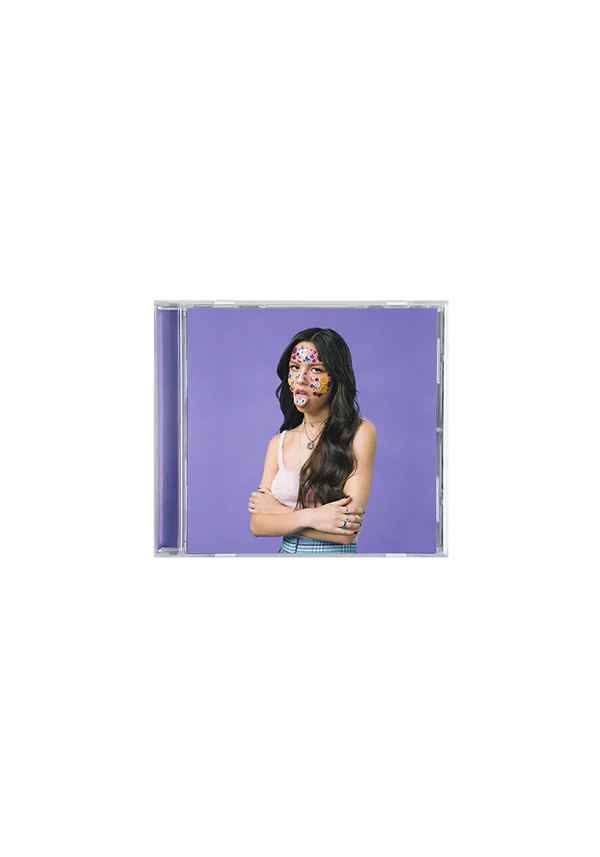

In January 2021, Olivia Rodrigo released “drivers license” as the lead single from her debut album SOUR. The track became a global phenomenon and one of the biggest streaming debuts in history. It matters now because it demonstrates how hyper-specific, narrative-driven songwriting can create immediate cultural resonance and long-term replay value in the streaming era.
Macro Structure: Why the Form Works
The song follows a verse–pre-chorus–chorus structure with a bridge and final chorus extension. It opens with Verse 1, builds through a pre-chorus, lands on the chorus, repeats the pattern for Verse 2, then uses a bridge for emotional escalation before returning to an expanded chorus.
This form succeeds because the chorus hook arrives early and repeats with increasing intensity. The pre-chorus creates consistent tension through rising melody and shorter phrases. The bridge provides a clear shift in perspective and stakes. The structure remains economical while allowing the emotional weight to accumulate across sections without unnecessary complexity.
Craft Techniques
1. Hyper-specific narrative details
The verses use precise, observable details rather than general heartbreak:
“I got my driver’s license last week / Just like we always talked about.”
These lines ground the song in a concrete life event, making the emotional fallout feel personal and believable. The technique shows how specificity can make universal feelings more impactful.
2. Pre-chorus tension through rising melody
The pre-chorus builds anticipation with shorter lines and ascending phrasing over a Bb–F–Gm–Eb progression:
“’Cause you were so excited for me to finally drive / But you were so excited for me to finally drive.”
This creates a clear lift into the chorus without adding extra sections.
3. Repetitive, emotionally direct chorus hook
The chorus centers on the repeated line “I got my driver’s license last week,” delivered with raw intensity. The hook is simple, memorable, and tied directly to the central pain point. Its repetition across the song reinforces the obsessive nature of the narrator’s thoughts.
4. Bridge as emotional peak and perspective shift
The bridge escalates with:
“Red lights, stop signs / I still see your face in the white cars, front yards.”
This section introduces vivid, recurring imagery and raises the emotional stakes before the final chorus returns with greater weight. It functions as both climax and reinforcement of the song’s core conflict.
Production Choices That Amplify the Songcraft
Produced by Dan Nigro, the track begins with a sparse piano foundation and gradually builds with subtle drums, bass, and layered vocals. The arrangement emphasizes dynamics and space, allowing Rodrigo’s vocal performance to carry the emotional intensity. Production decisions keep the focus on the lyrics and melody while using light textural layers in the chorus and bridge to heighten the sense of unraveling. The raw vocal takes and minimal processing reinforce the song’s confessional tone.
AI vs Human Lens
An AI could generate a verse–pre-chorus–chorus form, a repetitive hook, and basic diatonic chord changes. What would break is the accumulation of highly specific, lived-in details (the driver’s license, the white cars, the front yards) and the vocal performance choices that convey genuine pain and obsession. The song’s cultural timing and the way the personal narrative resonated as a shared experience also depend on authentic human context that current models still generalize.
Actionable Takeaway for Songwriters
The “Driver’s License” Specificity Drill (20 minutes)
- Choose one concrete life event or object (driver’s license, a text message, a specific location) as the central anchor.
- Write Verse 1 that describes the event with precise, observable details.
- Write a short pre-chorus that builds tension using shorter phrases.
- Write a chorus that states the emotional consequence of that event in simple, repeatable language.
- Add a bridge that introduces recurring imagery tied to the central pain.
- Record a rough demo over a simple progression (try Bb–F–Gm–Eb) and focus on whether the details feel specific and the hook feels emotionally direct.
Why “drivers license” Shows the Power of Specific Storytelling
- Hyper-specific details make universal heartbreak feel personal
- Early chorus hook drives immediate emotional connection
- Pre-chorus builds consistent tension and release
- Bridge escalates stakes without overcomplicating the form
Macro Structure Built for Emotional Accumulation
- Verse–pre-chorus–chorus creates reliable tension and payoff
- Bridge provides perspective shift before final intensification
- Repetition of the hook reinforces obsessive emotional state
- Economical form lets the narrative carry the weight
Four Craft Techniques
- Specific, observable life details in verses
- Rising pre-chorus melody for anticipation
- Simple, repeatable chorus hook tied to central pain
- Bridge with recurring imagery for emotional escalation
Production That Supports Raw Emotion
- Sparse piano foundation emphasizes vocal and lyric
- Gradual dynamic build mirrors emotional unraveling
- Layered vocals heighten chorus and bridge intensity
- Minimal processing preserves confessional tone
What AI Cannot Replicate
- Accumulation of highly specific, lived-in details
- Vocal performance of genuine pain and obsession
- Cultural resonance of authentic personal narrative
One Exercise for Writing with Specific Detail
- Anchor a song around one concrete event or object, describe it with precise details in the verse, build tension in the pre-chorus, and deliver the emotional consequence in a simple, repeatable chorus. Demo over basic chords.