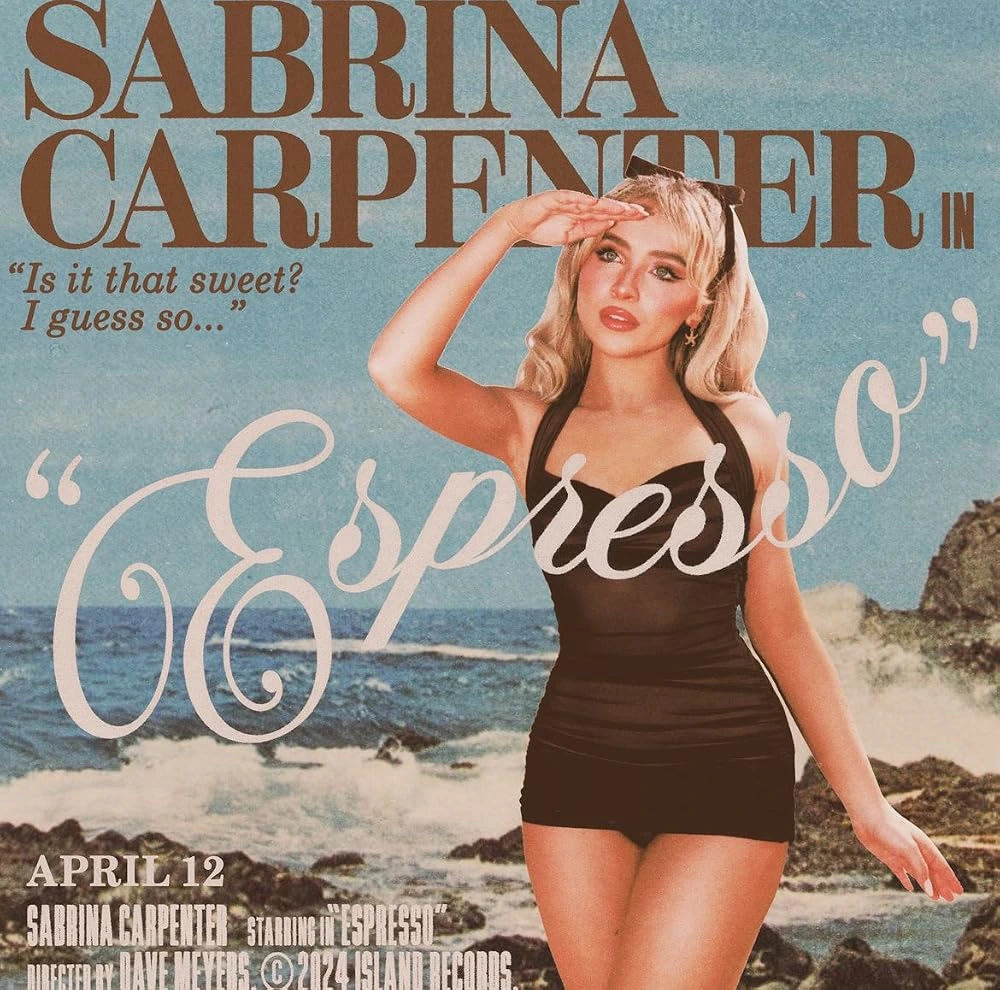

In April 2024, Sabrina Carpenter released “Espresso” as the lead single from Short n’ Sweet. The track quickly became a global number-one hit and a defining pop song of its era. It matters now because it demonstrates how a single, phonetically sharp hook combined with confident persona and tight structural economy can dominate streaming and radio without relying on trends or heavy production gimmicks.
Macro Structure: Why the Form Works
The song follows a streamlined verse–pre-chorus–chorus form with a post-chorus tag and a short bridge. It opens directly into Verse 1, builds through a pre-chorus, lands on the chorus hook, repeats the pattern, then uses a bridge for brief contrast before returning to the chorus and extended post-chorus.
This structure works because the chorus hook arrives early and repeats frequently with minimal variation. The pre-chorus creates consistent lift into the hook, while the post-chorus tag (“That’s that me espresso”) functions as both rhythmic extension and earworm reinforcement. The bridge provides just enough breathing room without disrupting momentum. Every section either sets up or delivers the central hook.
Craft Techniques
1. Phonetic hook construction
The title phrase “That’s that me espresso” uses internal rhyme, alliteration, and a playful mispronunciation of “espresso” to create immediate memorability. The line sits on a simple, repeating melodic motif over a B–F#–G#m–E progression, making it easy to sing and difficult to forget.
2. Confident persona through specific imagery
Verses use precise, attitude-driven details rather than vague boasts:
“Is it that sweet? I guess so / That’s that me espresso.”
These lines establish a self-assured, slightly teasing voice that carries through the entire song. The technique shows how a consistent character can make even simple lyrics feel distinctive.
3. Pre-chorus as tension builder
The pre-chorus (“Too bad your ex don’t do it for ya / Walked in and dream came trued it for ya”) uses shorter phrases and rising melody to create anticipation. It resolves cleanly into the chorus, demonstrating how a short, well-placed pre-chorus can sharpen the impact of a repetitive hook without adding unnecessary length.
4. Post-chorus tag for rhythmic reinforcement
After the chorus, the repeated “That’s that me espresso” functions as both hook extension and groove anchor. This technique keeps the song feeling hook-heavy while giving listeners a rhythmic phrase they can latch onto immediately.
Production Choices That Amplify the Songcraft
Produced by Julian Bunetta, the track features a bright, mid-tempo groove with prominent bass, crisp drums, and subtle disco-inspired elements. The arrangement stays relatively sparse, keeping focus on Carpenter’s vocal and the hook. Layered background vocals and light synth textures add polish without clutter. The production supports the song’s confident tone by maintaining clarity and rhythmic drive, allowing the lyrics and melody to cut through on first listen.
AI vs Human Lens
An AI could generate a similar verse–pre-chorus–chorus form, a catchy phonetic hook, and a mid-tempo groove. What would break is the specific vocal attitude and timing—Carpenter’s slightly sarcastic delivery, micro-phrasing choices, and the lived-in confidence that makes lines like “Is it that sweet? I guess so” feel natural rather than constructed. The song’s cultural timing and the way the hook interacts with real-world meme culture also depend on human context that statistical generation tends to flatten.
Actionable Takeaway for Songwriters
The “Me Espresso” Hook Drill (15–20 minutes)
- Write one short, phonetically playful phrase that can function as both title and hook (play with word sounds or mispronunciations).
- Place it in a chorus over a simple four-chord loop (try B–F#–G#m–E or a similar major-key movement).
- Write a short pre-chorus (two to four lines) that builds tension using shorter phrases.
- Add one verse with specific, attitude-driven imagery rather than general statements.
- Record a rough demo and repeat the hook phrase after the chorus as a rhythmic tag.
Listen back and check whether the hook feels instantly repeatable and whether the pre-chorus creates clear lift.
Why “Espresso” Demonstrates Effective Modern Pop Hook Craft
- Early, repetitive chorus hook drives streaming performance
- Phonetic wordplay creates instant memorability
- Confident persona carries through simple lyrics
- Tight structure minimizes filler
Macro Form Optimized for Hook Delivery
- Pre-chorus builds consistent anticipation
- Post-chorus tag extends the hook rhythmically
- Bridge provides minimal contrast before return
- High hook density without structural bloat
Four Craft Techniques
- Phonetic construction of the central hook
- Specific, character-driven imagery in verses
- Short pre-chorus for tension and release
- Repetitive tag for rhythmic reinforcement
Production That Supports Clarity and Groove
- Mid-tempo groove with prominent bass and crisp drums
- Sparse arrangement keeps focus on vocal and hook
- Light disco elements add energy without distraction
What AI Cannot Replicate Here
- Specific vocal attitude and micro-phrasing
- Natural interaction between hook and cultural context
- Lived-in confidence in delivery and timing
One Exercise for Stronger Pop Hooks
- Create a phonetically sharp hook phrase, build tension with a short pre-chorus, support it with a simple chord loop, and reinforce with a rhythmic tag. Demo and refine for immediate singability.