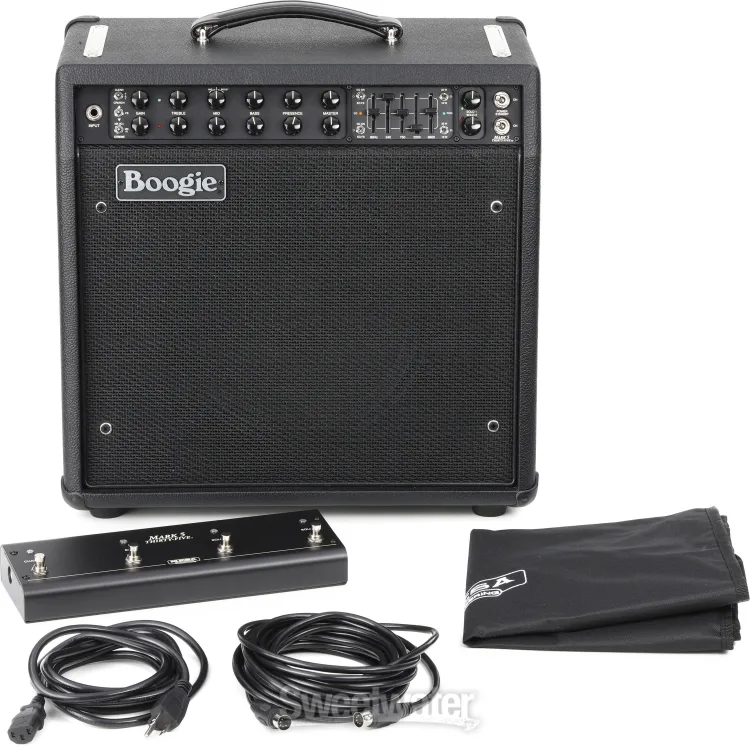

The Mesa/Boogie Mark V:35 is a versatile tube guitar amplifier that provides diverse tones from clean to high-gain. It is suitable for rock, blues, metal, and more. This amp features complex controls.
It features power scaling (10W, 25W, 35W) for flexibility in volume levels, along with built-in reverb, a graphic EQ, and direct recording options.
This amp is priced around $2,200–$2,500 for the combo version. Users note its exceptional build quality and tonal depth, though it weighs 44 pounds and makes a pop when switching channels.
The Mark Series
The Mark V:35 falls under the Mesa/Boogie’s iconic Mark series, a line that has evolved since the 1970s to deliver professional-grade amplification. This model is a compact version of the larger Mark V, with similar voicing options into a 35-watt package with EL84 power tubes for a punchy, responsive feel. It’s available as a head or 1×12 combo.
Channels and Voicings
Two channels with six modes total—Channel 1 (Clean, Fat, Crunch) for everything from sparkling cleans to edge-of-breakup drive; Channel 2 (Mark IIC+, Mark IV, Xtreme) for classic Mesa lead tones and modern aggression.
Power and Tubes
Switchable between 35W, 25W, and 10W, uses 4x EL84 power tubes and 6x 12AX7 preamp tubes for dynamic response.
Effects and Connectivity
Tube-driven spring reverb, buffered FX loop, 5-band graphic EQ, CabClone DI for speaker emulation, and headphone out.
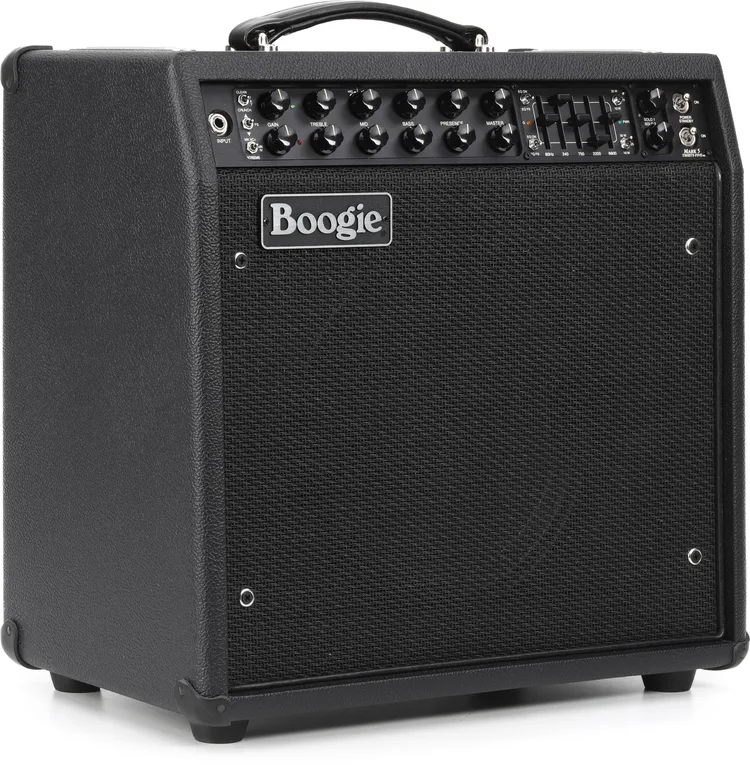
Controls
Independent gain, EQ, presence, master, and solo boosts per channel, plus footswitch for easy switching.
This amp suits intermediate to advanced guitarists who value tonal variety and are willing to experiment with settings. It’s great for live performances where headroom matters, but may be overkill for beginners or those on a tight budget. If you play in bands or record at home, its features like the CabClone make it practical, though consider lighter alternatives if portability is key.
Pros:
Exceptional versatility across genres, robust construction, and professional recording capabilities.
Cons:
Can be pricey and heavy; some report a learning curve for optimal tones and minor annoyances like fan noise or channel pops.
History and Background
The Mark series traces its roots back to 1972, when Randall Smith founded Mesa/Boogie in California and modified a Fender Princeton to create the original Mark I, which was a compact amp with boosted power and gain that caught the attention of legends like Carlos Santana and Keith Richards.
This early model established Mesa as a pioneer in boutique amplification with high-gain capabilities and tonal flexibility. By 1978, the Mark II introduced channel switching (or “mode switching”), a novel feature at the time.
Subsequent iterations like the Mark III and IV refined this with added EQ options, reverb, and more voicings, solidifying the series’ reputation through the 1980s and 1990s.
The Mark V, launched in 2009, expanded to three channels and nine modes, but its 90-watt heft led to demands for smaller variants. The Mark V:35 filled this gap, incorporating Dyna-Watt technology for enhanced low-power performance and maintaining the series’ legacy of innovation while appealing to gigging musicians who prioritize portability.
Today, it remains a flagship offering, though the Rectifier series has somewhat overshadowed it in high-gain circles.
Technical Specifications
Drawing from reliable retailer and review sources, here’s a comprehensive breakdown of the Mark V:35’s specs in table form for easy reference:
These specs highlight the amp’s focus on flexibility, with features like the CabClone allowing silent recording or direct-to-PA use, which is particularly useful for studio work or quiet practice.
Sound and Performance
The Mark V:35’s sound can emulate classic amp tones while delivering Mesa’s signature midrange punch and articulation. Channel 1’s Clean mode provides blackface-inspired headroom with sparkling highs, ideal for jazz or country. Fat adds mid-boost for warm, touch-sensitive blues drive. Crunch pushes into a powerful rock overdrive that responds well to guitar volume knobs.
Channel 2 shines in high-gain territory: Mark IIC+ offers an edgy scream for ’80s metal, Mark IV delivers rounded midrange for modern rock, and Xtreme provides blistering attack with tight bass, which are perfect for aggressive styles, while requiring a noise gate with high-output pickups to manage feedback.
The graphic EQ is a standout, allowing precise sculpting, while the reverb adds lush ambience without washing out the signal. Power scaling ensures usable tones at bedroom volumes, though the amp retains impressive thump and dynamics even at 10W.
Users note it’s louder than its wattage suggests, with excellent note separation and clarity across genres, but dialing in requires patience as the controls are interactive.
User Reviews and Experiences
On sites like Sweetwater and forums, the Mark V:35 earns high praise for its versatility—many call it a “modeler killer” with tones rivaling multiple amps in one unit. Guitarists appreciate its gig-readiness, with comments like “it holds up against any boutique amp” and “pristine cleans equal to a Fender Twin.”
Common complaints, however, include the weight (making it less portable than expected), a loud channel-switching pop, and occasional fan noise in quiet settings.
For metal players, it’s lauded for high-gain modes, but some wish for a dedicated clean/crunch split without mode switching. Overall ratings hover around 4.5–5 stars, with long-term owners noting durability and resale value.
Comparisons and Alternatives
The Mark V:35 offers more headroom than the 25W version but lacks the third channel and extra voicings (e.g., Tweed, Edge) of the 90W Mark V. Versus the Triple Crown TC-50, it has fewer channels but superior high-gain voicings; the Fillmore 50 provides simpler, vintage-inspired tones at a lower price.
For alternatives outside Mesa, consider these in a comparison table:
These options provide similar premium quality but vary in complexity and focus—e.g., the Archon for high-gain simplicity or the Friedman for blues-rock warmth.
Buying and Maintenance Advice
When purchasing, buy from authorized dealers like Sweetwater or Guitar Center for warranties and demos. Used models on Reverb can save $500–$800, but check tube condition. Custom finishes (e.g., British Cabernet) add $200–$400.
For maintenance, replace tubes every 1–2 years depending on use—EL84s wear faster in high-gain modes. Clean the chassis regularly, avoid extreme humidity, and use a surge protector.
If gigging, invest in a protective case due to its weight. Test in-store to ensure it matches your guitar and pedals, as it’s responsive but not plug-and-play for everyone. Ultimately, if tonal exploration excites you and budget allows, the Mark V:35 delivers lasting value; otherwise, explore alternatives for specific needs.
The Mesa/Boogie Mark V:35 stands as a cornerstone in the world of high-end guitar amplification, blending decades of innovation with modern practicality. Introduced in 2015 as a bridge between the compact Mark V:25 and the flagship 90-watt Mark V, it embodies the essence of the Mark series while addressing the needs of contemporary players who demand versatility without excessive size or complexity. This consumer guide delves deeply into its history, technical details, sound characteristics, user experiences, comparisons, alternatives, and practical advice to help you decide if it’s the right fit for your setup.
References On The Mesa Boogie Mark V:35
Premier Guitar: Mesa/Boogie Mark V Amp Review
MusicRadar: Mesa Engineering Mark Five 35 Combo review
Guitar Interactive: Mesa Boogie Mark V 35 Amplifier
Sweetwater: Mesa/Boogie Mark Five:35 Combo Amp
Wikipedia: Mesa/Boogie Mark Series
Neural DSP: A history of the Mesa Boogie Mark II series
Guitar.com: A brief history of Mesa/Boogie
Music Bliss: All You Need To Know About: Mesa/Boogie Mark Series Amps