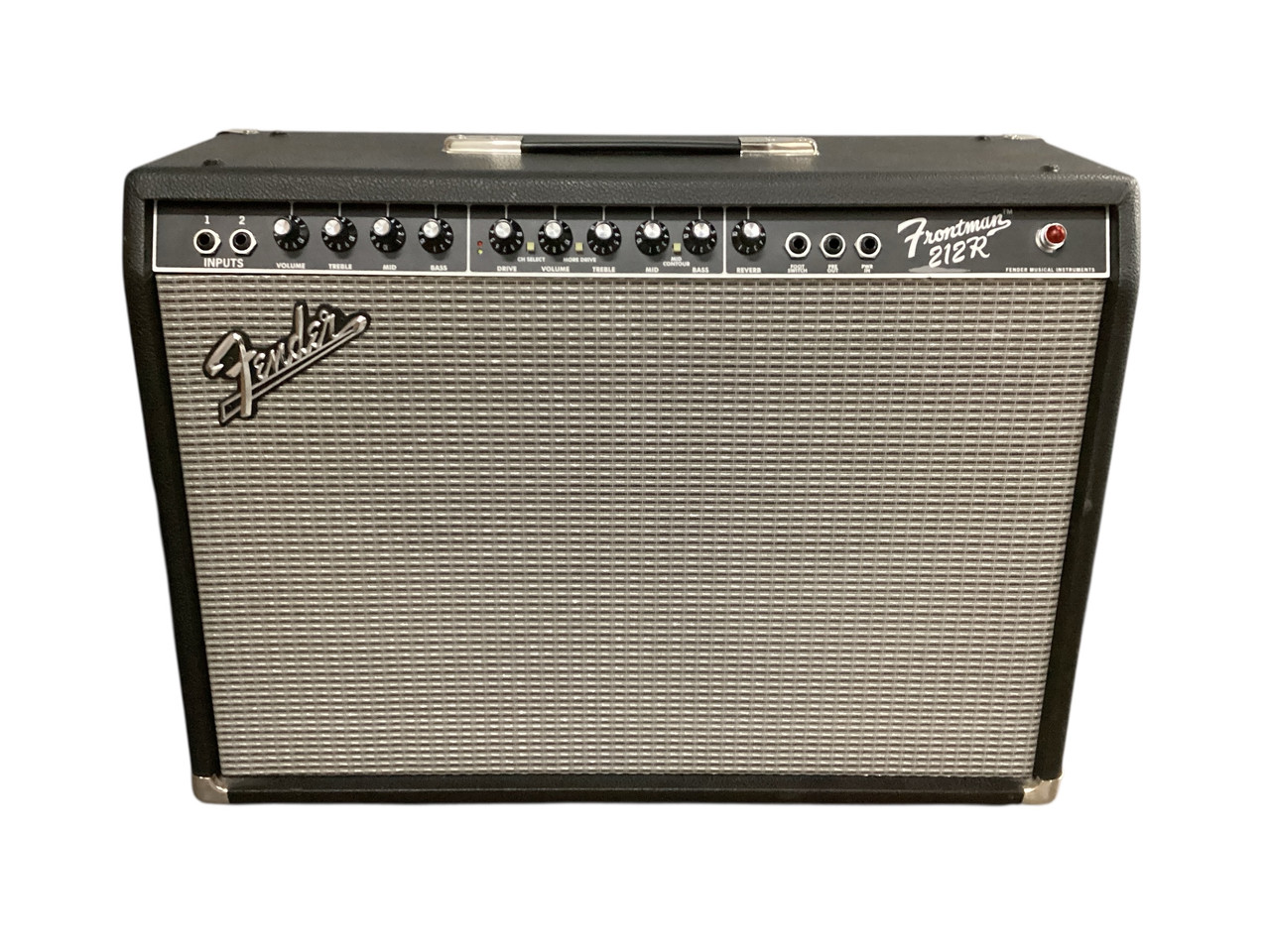

The Fender Frontman 212R is a solid-state guitar combo amp delivering 100 watts through two 12-inch speakers, offering impressive volume for its price range, typically found used for $100–$300 in 2026.
Strong Cleans
It excels in clean tones that are bright, versatile, and comparable to more expensive models, making it a solid choice for beginners or as a pedal platform.
Mixed Distortion and Effects:
Built-in drive channels provide usable overdrive for rock and blues, but heavier distortion can sound harsh; reverb is functional but often criticized for lacking finesse.
Value with Caveats
Great entry-level option for loud, reliable performance, but durability concerns like overheating transistors suggest checking used units carefully; alternatives like the Fender Champion 100 may offer more modern features.
User Experiences Vary
Positive feedback highlights its gig-worthiness and clean headroom, while some note needs for speaker upgrades or pedals to enhance tone; it’s not ideal for tube amp enthusiasts seeking warmth.
Overview
The Fender Frontman 212R, produced from around 2008 to 2013, is a discontinued solid-state combo amplifier designed for guitarists seeking high volume without breaking the bank.
It features a classic Fender blackface aesthetic reminiscent of the Twin Reverb, but relies on transistors rather than tubes for a more affordable, maintenance-free experience.
With 100 watts of power and dual 12-inch Fender Special Design speakers, it provides ample headroom for clean playing, making it suitable for practice, rehearsals, or small venues where you need to cut through a band mix. It’s often available on the used market, with prices ranging from $100 to $300 depending on condition, and includes practical features like an effects loop and footswitch for channel switching.
Pros and Cons
Pros:
- Exceptional clean channel that’s loud, clear, and versatile across genres like blues, rock, jazz, and country.
- Affordable and well-built for the price, with a saturated used market keeping costs low.
- Takes pedals well, allowing customization for better distortion or effects.
- Spring reverb adds depth, though it’s basic.
Cons:
- Distortion channels can be harsh or “fizzy” for heavier styles, often requiring external pedals.
- No headphone jack or master volume, limiting home practice options.
- Potential reliability issues with transistors overheating; some users report breakdowns.
- Heavy weight (around 50-60 lbs) makes it less portable than smaller amps.
Who It’s For
This amp suits beginners upgrading from smaller practice models, or intermediate players needing a reliable, loud clean platform for pedals. It’s ideal for genres emphasizing clean tones, like blues or classic rock, but may not satisfy those craving tube warmth or high-gain metal sounds without modifications. I
If you’re on a budget and prioritize volume over bells and whistles, it’s a strong contender—research suggests checking for mods like speaker swaps to maximize potential. For more modern options, consider the Fender Mustang GTX100 or Champion 100, which add modeling and effects for similar power.
Everything You Want To Know About The Fender Frontman 212R Guitar Amp
The Fender Frontman 212R represents a classic entry in Fender’s lineup of affordable, high-powered solid-state amplifiers, produced primarily between 2008 and 2013 before being discontinued.
As a combo amp, it combines a 100-watt power section with two 12-inch Fender Special Design speakers in an open-back cabinet, delivering a design that prioritizes volume and clean headroom over complex digital modeling or tube-driven warmth.
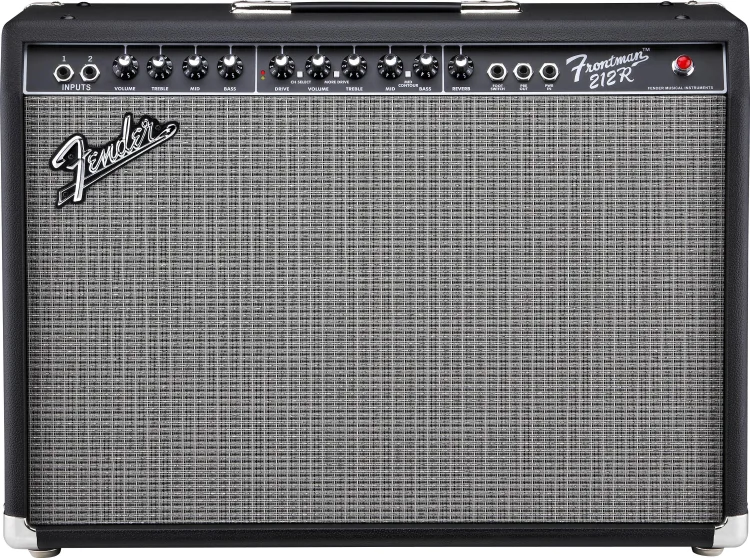
Its aesthetic draws from iconic Fender models like the Twin Reverb, featuring a black tolex covering, silver grille cloth, and straightforward control layout, but under the hood, it’s fully transistor-based for reliability and low maintenance.
Originally retailing around $300–$410, it’s now primarily available on the used market, where prices in 2026 typically range from $100 for well-worn units to $300 for those in excellent condition, often through platforms like Reverb, eBay, or Facebook Marketplace.
This makes it an accessible choice for budget-conscious guitarists, though potential buyers should inspect for common issues like transistor failures due to overheating.
In terms of specifications, the amp operates at 100 watts RMS into 4 ohms, with dual inputs (normal and -6dB for high-output instruments), and measures approximately 26 inches wide, 19 inches high, and 10 inches deep, weighing in at a hefty 55–60 pounds—making it portable for gigs but not ideal for frequent travel.
It includes three channels: a clean channel, a drive channel for overdrive, and a “more drive” mode for added saturation, all switchable via the included two-button footswitch.
Controls include separate volume knobs for clean and drive, a shared 3-band EQ (treble, mid, bass), a mid contour switch for scooped mids (useful for metal or rock), a drive select button, and a single reverb knob controlling a spring reverb tank.
Additional connectivity includes an effects loop (send/return) for inserting pedals post-preamp, pre-out and power-in jacks for slaving or external use, and speaker outputs allowing disconnection of one speaker to run at 8 ohms for reduced volume.
Notably absent are a headphone jack, master volume, or built-in effects beyond reverb, which keeps the design focused but limits versatility for silent practice or complex setups.
Sound quality is where the Frontman 212R shines in certain areas while showing its budget roots in others.
The clean channel is widely praised for its bright, Fender-esque tone that’s loud and clear even at low volumes, with excellent headroom that rivals some tube amps for blues, jazz, country, and classic rock.
Users often describe it as “warm” for a solid-state amp, especially when paired with single-coil guitars like Stratocasters, and it handles pedals exceptionally well, serving as a great platform for overdrive, delay, or chorus effects.
The drive channel offers natural-sounding overdrive for lighter distortion, but pushing into “more drive” can result in a harsh, fizzy tone that’s less appealing for heavy metal or high-gain applications—many recommend external pedals like a Tube Screamer or Boss DS-1 to refine it.
Reverb is a spring tank type, providing spatial depth but often criticized for being overly washy or lacking adjustability—settings above “2” can muddy the sound. Overall, the amp’s volume is a standout, capable of overpowering drums in rehearsals without distortion, but it lacks the dynamic response and warmth of tube amps.
Build quality reflects its entry-level positioning: the cabinet is sturdy with a wooden construction, but the open-back design and exposed speaker connections give it a less premium feel, and the on/off switch at the rear can be inconvenient for wall-mounted setups. The included footswitch is robust, and the amp is generally reliable if not overdriven excessively, though some users report transistor failures from heat buildup—mods like adding a fan or upgrading resistors are common fixes.
Stock speakers are functional but often swapped for upgrades like Celestion Seventy 80s to improve bottom end and clarity.
In user communities, such as forums and social media, it’s frequently mentioned as a “workhorse” for gigs, with artists like Daniel Brennan and Riccardo Riva using it live. Recent X posts (formerly Twitter) highlight its affordability for touring or home use, though sales listings dominate discussions.
User reviews from sites like zZounds paint a largely positive picture, with an average rating around 4.5/5 from over 50 submissions, emphasizing value, clean sound, and power.
For instance, many praise its ability to sound “close to tube amps” for cleans, with comments like “best bang for the buck” and “gig-worthy,” but lower ratings often cite poor distortion, brittle treble, or subpar reverb.
Equipboard users rate it 4/5 overall, noting its versatility with pedals but mediocre built-in effects. Compared to alternatives, the Frontman 212R holds up well against budget solid-state amps like the Peavey Bandit, but falls short of tube options like the Marshall Origin 5C for tone depth, or digital models like the Fender Mustang for features.
For potential buyers, it’s recommended to test for hum or buzz, consider mods, and pair it with pedals for optimal results—ultimately, it offers tremendous value if your focus is on loud, clean amplification without frills.
| Specification | Details | Source Notes |
| Power Output | 100W RMS into 4 ohms at 5% THD | Official manual; aligns with provided table. |
| Speakers | 2 x 12″ Fender Special Design (8 ohms, 50-75W each) | Consistent across sources. |
| Channels | Clean (with volume/EQ), Drive (with drive/volume/EQ), More Drive (switchable) | Matches provided; footswitchable. |
| EQ | Separate 3-band (Treble, Mid, Bass) per channel; Mid Contour switch on drive channel | Provided table specifies shared, but sources confirm per-channel. |
| Effects | Spring Reverb (single master knob) | No additional built-in effects. |
| Inputs/Outputs | 2 x 1/4″ inputs, Effects Loop (Send/Return), Preamp Out, Power Amp In, Footswitch jack | Exact match. |
| Dimensions | 26″ W x 19.5″ H x 9.5″ D | Slight variance from provided approx. 10″ D; official measurements. |
| Weight | 48 lbs (21.6 kg) | Commonly reported; differs from provided 55-60 lbs, possibly a range for loaded/shipping weight. |
| Power Requirements | 120V AC, 60Hz (US model); 360W consumption | Matches provided. |
| Accessories Included | 2-button footswitch (Channel/Drive-More Drive) | Standard inclusion. |
| Additional Features | Black textured vinyl covering, silver grille cloth, made in China | From product overviews. |
| Pros | Cons |
| Loud and clear cleans with great headroom | Harsh distortion at high gain |
| Affordable, especially used | No headphone jack or master volume |
| Versatile as a pedal platform | Potential overheating issues |
| Includes footswitch and effects loop | Basic reverb lacks fine control |
| Sturdy build for gigging | Heavy and less portable |
| Good value for beginners | Stock speakers may need upgrading |